
September 29, 2026
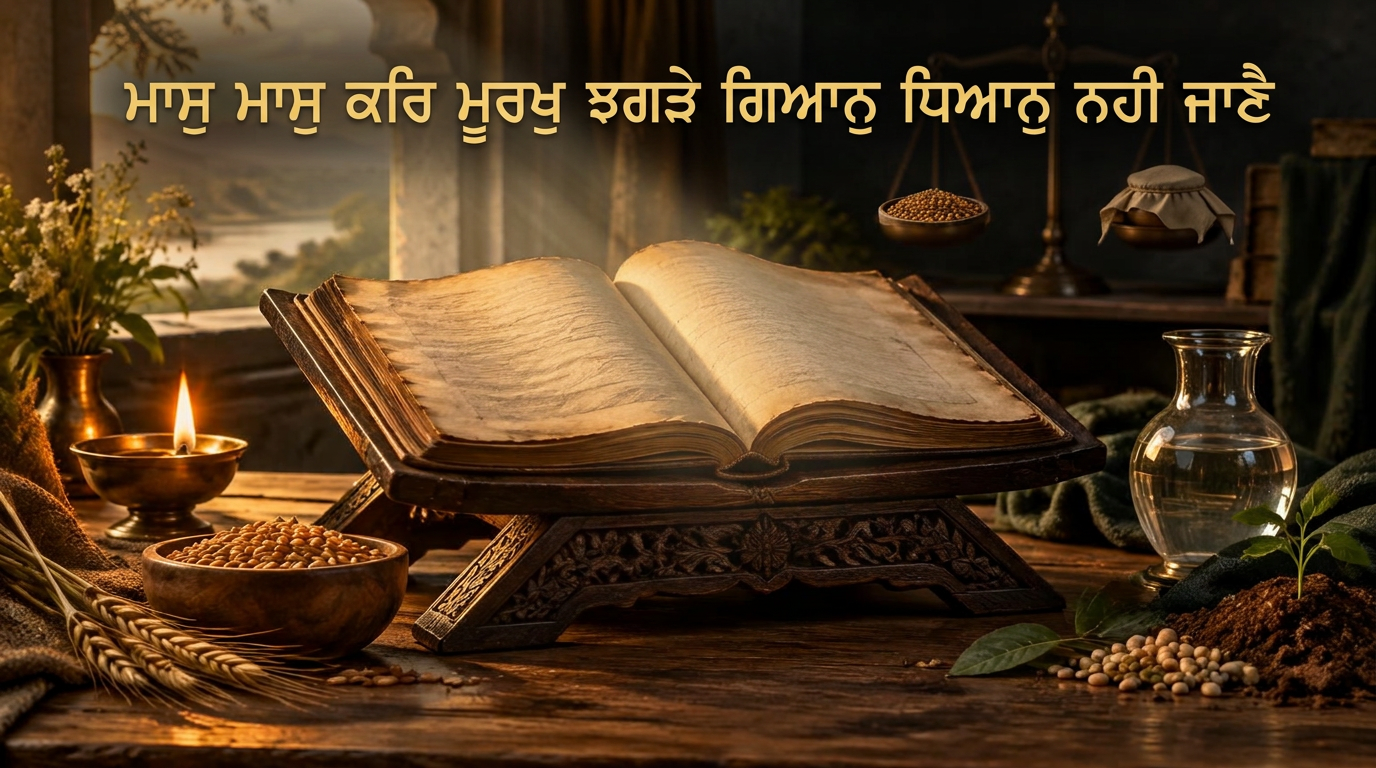
ਮਾਸੁ ਮਾਸੁ ਕਰਿ ਮੂਰਖੁ ਝਗੜੇ — ਸੰਪੂਰਨ ਦੁਭਾਸ਼ੀ ਪੜਚੋਲ
By Sardar Ajaypal Singh
ਮ: 1 ॥
ਮਾਸੁ ਮਾਸੁ ਕਰਿ ਮੂਰਖੁ ਝਗੜੇ ਗਿਆਨੁ ਧਿਆਨੁ ਨਹੀ ਜਾਣੈ ॥
ਕਉਣੁ ਮਾਸੁ ਕਉਣੁ ਸਾਗੁ ਕਹਾਵੈ ਕਿਸੁ ਮਹਿ ਪਾਪ ਸਮਾਣੇ ॥
English Translation & Analysis
According to the profound spiritual psychology of Guru Nanak Dev Ji’s Shabad, sin (ਪਾਪ) resides in neither the meat nor the saag (vegetables); rather, sin resides in the human mind, intentions, and actions. Guru Sahib dismantles the hypocrisy of those who believe that adhering to a specific diet automatically grants spiritual purity, even while their minds remain entangled in corruption, greed, and ego. The true nature of sin, as highlighted in this philosophical context, stems from:
When Guru Nanak Dev Ji says "ਗਿਆਨੁ ਧਿਆਨੁ ਨਹੀ ਜਾਣੈ", he is pointing out that the individual endlessly debating over meat lacks both the true understanding of divine wisdom (ਗਿਆਨੁ) and the ability to focus their mind and actions upon that wisdom (ਧਿਆਨੁ). True ਧਿਆਨੁ is the continuous awareness and practical application of ਗਿਆਨੁ in one's daily life, which frees a person from useless, ego-driven arguments.
- Spiritual Blindness (ਅਗਿਆਨਤਾ): Squandering one’s life in superficial debates over food, completely disconnected from divine wisdom (ਗਿਆਨੁ) and lacking the focus to anchor the mind upon that wisdom (ਧਿਆਨੁ).
- Hypocrisy and Exploitation (ਪਖੰਡ ਅਤੇ ਜ਼ੁਲਮ): Claiming religious purity by eating only plants, yet exploiting others, acting with cruelty, or suppressing the vulnerable (metaphorically "eating the flesh of men" through corruption and injustice).
- Ego (ਹੰਕਾਰ): Harboring an arrogant superiority complex based on external dietary choices rather than cultivating internal humility and compassion.
Guru Sahib shifts the focus from the biological composition of food to the purity of consciousness. True religion and purity are defined by honest living, compassion, and continuous remembrance of the Creator.
Through this Shabad, Guru Sahib actively dismantles the Pandit’s false assumption that simply giving up a specific food item (meat) automatically makes a person spiritual, pure, or superior.
Gurmat Principle: Spirituality is defined by character, not by a dietary checklist. For instance: if a person strictly eats pure, vegetarian "saag," but takes bribes, steals the rights of the poor, abuses his wife, and is blinded by ego—will that "saag" make him a pure or holy person? Absolutely not! According to Gurmat, his vegetarian diet is spiritually meaningless if his actions are corrupt. Sin is rooted in a person's intentions and deeds, not in the physical food on their plate.
ਪੰਜਾਬੀ ਵਿਆਖਿਆ
ਗੁਰੂ ਨਾਨਕ ਦੇਵ ਜੀ ਦੇ ਸ਼ਬਦ ਦੇ ਡੂੰਘੇ ਆਤਮਿਕ ਮਨੋਵਿਗਿਆਨ ਅਨੁਸਾਰ, ਪਾਪ ਨਾ ਤਾਂ ਮਾਸ ਵਿੱਚ ਵੱਸਦਾ ਹੈ ਅਤੇ ਨਾ ਹੀ ਸਾਗ (ਸਬਜ਼ੀਆਂ) ਵਿੱਚ; ਸਗੋਂ ਪਾਪ ਮਨੁੱਖ ਦੇ ਮਨ, ਨੀਅਤ ਅਤੇ ਕਰਮਾਂ ਵਿੱਚ ਵੱਸਦਾ ਹੈ।
ਗੁਰੂ ਸਾਹਿਬ ਉਨ੍ਹਾਂ ਲੋਕਾਂ ਦੇ ਪਾਖੰਡ ਨੂੰ ਢਾਹੁੰਦੇ ਹਨ ਜੋ ਇਹ ਮੰਨਦੇ ਹਨ ਕਿ ਸਿਰਫ਼ ਇੱਕ ਖਾਸ ਖੁਰਾਕ ਖਾਣ ਨਾਲ ਆਤਮਿਕ ਪਵਿੱਤਰਤਾ ਮਿਲ ਜਾਂਦੀ ਹੈ, ਜਦਕਿ ਉਨ੍ਹਾਂ ਦਾ ਮਨ ਭ੍ਰਿਸ਼ਟਾਚਾਰ, ਲਾਲਚ ਅਤੇ ਹੰਕਾਰ ਵਿੱਚ ਫਸਿਆ ਹੁੰਦਾ ਹੈ। ਇਸ ਦਾਰਸ਼ਨਿਕ ਪ੍ਰਸੰਗ ਵਿੱਚ ਉਜਾਗਰ ਕੀਤੇ ਅਨੁਸਾਰ, ਪਾਪ ਦਾ ਅਸਲ ਸੁਭਾਅ ਇਹਨਾਂ ਗੱਲਾਂ ਤੋਂ ਪੈਦਾ ਹੁੰਦਾ ਹੈ:
ਜਦੋਂ ਗੁਰੂ ਨਾਨਕ ਦੇਵ ਜੀ ਕਹਿੰਦੇ ਹਨ "ਗਿਆਨੁ ਧਿਆਨੁ ਨਹੀ ਜਾਣੈ", ਤਾਂ ਉਹ ਇਹ ਦੱਸ ਰਹੇ ਹਨ ਕਿ ਮਾਸ ਉੱਤੇ ਬਹਿਸ ਕਰਨ ਵਾਲੇ ਵਿਅਕਤੀ ਕੋਲ ਨਾ ਤਾਂ ਇਲਾਹੀ ਬੁੱਧੀ (ਗਿਆਨ) ਦੀ ਸੱਚੀ ਸਮਝ ਹੈ ਅਤੇ ਨਾ ਹੀ ਉਸ ਗਿਆਨ 'ਤੇ ਆਪਣੇ ਮਨ ਅਤੇ ਕਰਮਾਂ ਨੂੰ ਟਿਕਾਉਣ ਦੀ ਸਮਰੱਥਾ (ਧਿਆਨ) ਹੈ। ਅਸਲੀ 'ਧਿਆਨ' ਰੋਜ਼ਾਨਾ ਜੀਵਨ ਵਿੱਚ 'ਗਿਆਨ' ਦੀ ਨਿਰੰਤਰ ਜਾਗਰੂਕਤਾ ਅਤੇ ਵਿਹਾਰਕ ਵਰਤੋਂ ਹੈ, ਜੋ ਮਨੁੱਖ ਨੂੰ ਬੇਕਾਰ ਅਤੇ ਹੰਕਾਰ ਭਰੀਆਂ ਬਹਿਸਾਂ ਤੋਂ ਮੁਕਤ ਕਰਦਾ ਹੈ।
- ਆਤਮਿਕ ਅੰਨ੍ਹਾਪਣ (Spiritual Blindness): ਆਪਣੀ ਜ਼ਿੰਦਗੀ ਨੂੰ ਭੋਜਨ ਦੀਆਂ ਸਤਹੀ ਬਹਿਸਾਂ ਵਿੱਚ ਬਰਬਾਦ ਕਰਨਾ, ਇਲਾਹੀ ਬੁੱਧੀ (ਗਿਆਨ) ਤੋਂ ਪੂਰੀ ਤਰ੍ਹਾਂ ਟੁੱਟ ਜਾਣਾ ਅਤੇ ਉਸ ਗਿਆਨ ਉੱਤੇ ਮਨ ਨੂੰ ਟਿਕਾਉਣ (ਧਿਆਨ) ਦੀ ਘਾਟ ਹੋਣਾ।
- ਪਖੰਡ ਅਤੇ ਜ਼ੁਲਮ (Hypocrisy and Exploitation): ਸਿਰਫ਼ ਪੌਦੇ ਖਾ ਕੇ ਧਾਰਮਿਕ ਪਵਿੱਤਰਤਾ ਦਾ ਦਾਅਵਾ ਕਰਨਾ, ਪਰ ਦੂਜਿਆਂ ਦਾ ਸ਼ੋਸ਼ਣ ਕਰਨਾ, ਬੇਰਹਿਮੀ ਨਾਲ ਪੇਸ਼ ਆਉਣਾ, ਜਾਂ ਕਮਜ਼ੋਰਾਂ ਨੂੰ ਦਬਾਉਣਾ (ਭ੍ਰਿਸ਼ਟਾਚਾਰ ਅਤੇ ਬੇਇਨਸਾਫ਼ੀ ਰਾਹੀਂ ਅਲੰਕਾਰਕ ਤੌਰ 'ਤੇ "ਮਨੁੱਖਾਂ ਦਾ ਮਾਸ ਖਾਣਾ")।
- ਹੰਕਾਰ (Ego): ਅੰਦਰੂਨੀ ਨਿਮਰਤਾ ਅਤੇ ਦਇਆ ਪੈਦਾ ਕਰਨ ਦੀ ਬਜਾਏ, ਬਾਹਰੀ ਖੁਰਾਕ ਦੇ ਆਧਾਰ 'ਤੇ ਹੰਕਾਰ ਭਰਿਆ ਉੱਚਤਾ ਦਾ ਭਰਮ (superiority complex) ਪਾਲਣਾ।
ਗੁਰੂ ਸਾਹਿਬ ਧਿਆਨ ਭੋਜਨ ਦੀ ਜੀਵ-ਵਿਗਿਆਨਕ ਬਣਤਰ ਤੋਂ ਹਟਾ ਕੇ ਚੇਤਨਾ (consciousness) ਦੀ ਪਵਿੱਤਰਤਾ 'ਤੇ ਕੇਂਦਰਿਤ ਕਰਦੇ ਹਨ। ਸੱਚਾ ਧਰਮ ਅਤੇ ਪਵਿੱਤਰਤਾ ਇਮਾਨਦਾਰੀ ਵਾਲੀ ਜ਼ਿੰਦਗੀ, ਦਇਆ, ਅਤੇ ਸਿਰਜਣਹਾਰ ਦੀ ਨਿਰੰਤਰ ਯਾਦ ਦੁਆਰਾ ਪਰਿਭਾਸ਼ਿਤ ਹੁੰਦੀ ਹੈ।
ਇਸ ਸ਼ਬਦ ਰਾਹੀਂ, ਗੁਰੂ ਸਾਹਿਬ ਪੰਡਿਤ ਦੇ ਇਸ ਝੂਠੇ ਭਰਮ ਨੂੰ ਤੋੜਦੇ ਹਨ ਕਿ ਸਿਰਫ਼ ਇੱਕ ਖਾਸ ਭੋਜਨ (ਮਾਸ) ਛੱਡ ਦੇਣ ਨਾਲ ਕੋਈ ਵਿਅਕਤੀ ਆਤਮਿਕ, ਪਵਿੱਤਰ ਜਾਂ ਉੱਤਮ ਬਣ ਜਾਂਦਾ ਹੈ। ਗੁਰਮਤਿ ਸਿਧਾਂਤ: ਆਤਮਿਕਤਾ ਕਿਰਦਾਰ ਨਾਲ ਪਰਿਭਾਸ਼ਿਤ ਹੁੰਦੀ ਹੈ, ਨਾ ਕਿ ਖਾਣ-ਪੀਣ ਦੀ ਸੂਚੀ ਨਾਲ। ਉਦਾਹਰਨ ਵਜੋਂ: ਜੇਕਰ ਕੋਈ ਵਿਅਕਤੀ ਸਿਰਫ਼ ਪਵਿੱਤਰ, ਸ਼ਾਕਾਹਾਰੀ "ਸਾਗ" ਖਾਂਦਾ ਹੈ, ਪਰ ਰਿਸ਼ਵਤ ਲੈਂਦਾ ਹੈ, ਗਰੀਬਾਂ ਦਾ ਹੱਕ ਮਾਰਦਾ ਹੈ, ਆਪਣੀ ਪਤਨੀ 'ਤੇ ਜ਼ੁਲਮ ਕਰਦਾ ਹੈ ਅਤੇ ਹੰਕਾਰ ਵਿੱਚ ਅੰਨ੍ਹਾ ਹੈ—ਤਾਂ ਕੀ ਉਹ "ਸਾਗ" ਉਸਨੂੰ ਪਵਿੱਤਰ ਜਾਂ ਧਰਮੀ ਬਣਾ ਦੇਵੇਗਾ? ਬਿਲਕੁਲ ਨਹੀਂ! ਗੁਰਮਤਿ ਅਨੁਸਾਰ, ਜੇਕਰ ਉਸਦੇ ਕਰਮ ਭ੍ਰਿਸ਼ਟ ਹਨ, ਤਾਂ ਉਸਦੀ ਸ਼ਾਕਾਹਾਰੀ ਖੁਰਾਕ ਆਤਮਿਕ ਤੌਰ 'ਤੇ ਅਰਥਹੀਣ ਹੈ। ਪਾਪ ਵਿਅਕਤੀ ਦੀ ਨੀਅਤ ਅਤੇ ਕਰਮਾਂ ਵਿੱਚ ਜੜ੍ਹ ਫੜਦਾ ਹੈ, ਨਾ ਕਿ ਉਸਦੀ ਥਾਲੀ ਵਿੱਚ ਪਏ ਭੌਤਿਕ ਭੋਜਨ ਵਿੱਚ।
ਗੈਂਡਾ ਮਾਰਿ ਹੋਮ ਜਗ ਕੀਏ ਦੇਵਤਿਆ ਕੀ ਬਾਣੇ ॥
ਮਾਸੁ ਛੋਡਿ ਬੈਸਿ ਨਕੁ ਪਕੜਹਿ ਰਾਤੀ ਮਾਣਸ ਖਾਣੇ ॥
English Translation & Analysis
The Technique of Reference: Guru Nanak Dev Ji employs a masterclass in philosophical debate. To render the Brahmin priest completely speechless, Guru Sahib uses the technique of citing the priest’s own revered scriptures against him. By cornering the Pandit with the historical actions of his own deities, Guru Sahib leaves no room for escape or counter-argument.
Historical Context: In ancient Vedic texts, Puranas, and Manusmriti, animal sacrifice was an integral part of grand Yagnas (sacrificial fires) and Shraddha (ancestral offering) ceremonies. According to these texts, offering the meat of a rhinoceros (Gainda) was considered the highest form of sacrifice, believed to satisfy the ancestors and demigods for countless eras.
Meaning and Core Essence: Guru Sahib says, "O Pandit! Today you put on this massive theatrical display of purity in the name of vegetarianism, but have you forgotten your own history? Your own scriptures state that according to the ways of the gods (ਦੇਵਤਿਆ ਕੀ ਬਾਣੇ), massive animals like rhinos were slaughtered to perform grand sacrificial fires (ਹੋਮ ਜਗ). If meat is inherently sinful and impure, how were your own gods and ancestors considered holy while performing these sacrifices?"
Psychological Impact & Gurmat Principle: Guru Sahib strikes directly at the Pandit's superiority complex, revealing that his strict vegetarianism is not an eternal divine law, but a culturally evolved ego-trip. If the very founders and deities of his religion utilized meat, his current disgust toward it is purely performative. Importantly, Guru Sahib is not advocating for sacrificing rhinos or eating meat; rather, He is using the opponent's own historical premise to destroy his current hypocritical stance. The ultimate Gurmat principle established here is that true spirituality and purity belong to the consciousness, character, and honest living, not to the biological origins of a meal.
The Public Spectacle: "ਪਕੜਹਿ" This signifies putting on a fabricated, theatrical display of purity in broad daylight, right in front of everyone. To show off to the public, you intentionally sit far away from where meat is kept. You dramatically pinch your nose or cover your face with a cloth, pretending to be absolutely repulsed by the smell, simply to assert to the world how exceptionally pure and righteous you are.
Secret Sins: "ਰਾਤੀ ਮਾਣਸ ਖਾਣੇ" Here, 'night' (ਰਾਤੀ) does not merely refer to the sun setting or the time of day. In Gurbani, 'night' is a powerful metaphor for acting 'secretly'—operating behind closed doors, hidden in the shadows where no worldly eye is watching.
The Metaphor of Cannibalism: To "eat humans" secretly does not mean literal cannibalism. It is a profound and striking metaphor for immense exploitation. It means: sucking the blood of the poor, accepting bribes, robbing innocent and naive people through a web of false religious rituals, and ruthlessly usurping the rightful earnings of others.
ਪੰਜਾਬੀ ਵਿਆਖਿਆ
ਹਵਾਲਾ ਜੁਗਤੀ (The Technique of Reference): ਗੁਰੂ ਨਾਨਕ ਦੇਵ ਜੀ ਦਾਰਸ਼ਨਿਕ ਬਹਿਸ ਦੀ ਇੱਕ ਮਹਾਨ ਜੁਗਤੀ ਵਰਤਦੇ ਹਨ। ਬ੍ਰਾਹਮਣ ਪੁਜਾਰੀ ਨੂੰ ਪੂਰੀ ਤਰ੍ਹਾਂ ਲਾਜਵਾਬ ਕਰਨ ਲਈ, ਗੁਰੂ ਸਾਹਿਬ ਪੁਜਾਰੀ ਦੇ ਆਪਣੇ ਹੀ ਸਤਿਕਾਰਤ ਗ੍ਰੰਥਾਂ ਦਾ ਹਵਾਲਾ ਉਸੇ ਦੇ ਖਿਲਾਫ ਵਰਤਦੇ ਹਨ। ਪੰਡਿਤ ਨੂੰ ਉਸਦੇ ਆਪਣੇ ਦੇਵਤਿਆਂ ਦੇ ਇਤਿਹਾਸਕ ਕਰਮਾਂ ਨਾਲ ਨੁੱਕਰੇ ਲਾ ਕੇ, ਗੁਰੂ ਸਾਹਿਬ ਬਚਣ ਜਾਂ ਜਵਾਬੀ ਦਲੀਲ ਦੇਣ ਦੀ ਕੋਈ ਗੁੰਜਾਇਸ਼ ਨਹੀਂ ਛੱਡਦੇ।
ਇਤਿਹਾਸਕ ਪਿਛੋਕੜ (Historical Context): ਪ੍ਰਾਚੀਨ ਵੈਦਿਕ ਗ੍ਰੰਥਾਂ, ਪੁਰਾਣਾਂ ਅਤੇ ਮਨੂਸਮ੍ਰਿਤੀ ਵਿੱਚ, ਜਾਨਵਰਾਂ ਦੀ ਬਲੀ ਵੱਡੇ ਯੱਗਾਂ (sacrificial fires) ਅਤੇ ਸ਼ਰਾਧ (ancestral offering) ਰਸਮਾਂ ਦਾ ਇੱਕ ਅਨਿੱਖੜਵਾਂ ਅੰਗ ਸੀ। ਇਹਨਾਂ ਗ੍ਰੰਥਾਂ ਅਨੁਸਾਰ, ਗੈਂਡੇ ਦਾ ਮਾਸ ਭੇਟ ਕਰਨਾ ਬਲੀ ਦਾ ਸਭ ਤੋਂ ਉੱਚਾ ਰੂਪ ਮੰਨਿਆ ਜਾਂਦਾ ਸੀ, ਜਿਸ ਬਾਰੇ ਵਿਸ਼ਵਾਸ ਸੀ ਕਿ ਇਹ ਅਣਗਿਣਤ ਯੁੱਗਾਂ ਤੱਕ ਪਿੱਤਰਾਂ ਅਤੇ ਦੇਵਤਿਆਂ ਨੂੰ ਤ੍ਰਿਪਤ ਕਰਦਾ ਹੈ।
ਅਰਥ ਅਤੇ ਕੇਂਦਰੀ ਭਾਵ (Meaning and Core Essence): ਗੁਰੂ ਸਾਹਿਬ ਕਹਿੰਦੇ ਹਨ, "ਹੇ ਪੰਡਿਤ! ਅੱਜ ਤੂੰ ਸ਼ਾਕਾਹਾਰ ਦੇ ਨਾਂ 'ਤੇ ਪਵਿੱਤਰਤਾ ਦਾ ਇੰਨਾ ਵੱਡਾ ਨਾਟਕ ਕਰ ਰਿਹਾ ਹੈਂ, ਪਰ ਕੀ ਤੂੰ ਆਪਣਾ ਇਤਿਹਾਸ ਭੁੱਲ ਗਿਆ ਹੈਂ? ਤੇਰੇ ਆਪਣੇ ਗ੍ਰੰਥ ਦੱਸਦੇ ਹਨ ਕਿ ਦੇਵਤਿਆਂ ਦੀਆਂ ਰੀਤਾਂ (ਦੇਵਤਿਆ ਕੀ ਬਾਣੇ) ਅਨੁਸਾਰ, ਵੱਡੇ ਯੱਗ (ਹੋਮ ਜਗ) ਕਰਨ ਲਈ ਗੈਂਡੇ ਵਰਗੇ ਵਿਸ਼ਾਲ ਜਾਨਵਰਾਂ ਨੂੰ ਮਾਰਿਆ ਜਾਂਦਾ ਸੀ। ਜੇਕਰ ਮਾਸ ਆਪਣੇ ਆਪ ਵਿੱਚ ਪਾਪੀ ਅਤੇ ਅਪਵਿੱਤਰ ਹੈ, ਤਾਂ ਇਹਨਾਂ ਬਲੀਆਂ ਨੂੰ ਦੇਣ ਵੇਲੇ ਤੇਰੇ ਆਪਣੇ ਦੇਵਤੇ ਅਤੇ ਵਡੇਰੇ ਪਵਿੱਤਰ ਕਿਵੇਂ ਮੰਨੇ ਗਏ?"
ਮਨੋਵਿਗਿਆਨਕ ਪ੍ਰਭਾਵ ਅਤੇ ਗੁਰਮਤਿ ਸਿਧਾਂਤ (Psychological Impact & Gurmat Principle): ਗੁਰੂ ਸਾਹਿਬ ਸਿੱਧਾ ਪੰਡਿਤ ਦੇ ਹੰਕਾਰ (superiority complex) 'ਤੇ ਚੋਟ ਕਰਦੇ ਹਨ, ਇਹ ਉਜਾਗਰ ਕਰਦੇ ਹੋਏ ਕਿ ਉਸਦਾ ਕੱਟੜ ਸ਼ਾਕਾਹਾਰ ਕੋਈ ਸਦੀਵੀ ਇਲਾਹੀ ਨਿਯਮ ਨਹੀਂ, ਸਗੋਂ ਸੱਭਿਆਚਾਰਕ ਤੌਰ 'ਤੇ ਵਿਕਸਤ ਹੋਇਆ ਇੱਕ ਹੰਕਾਰ ਦਾ ਰੂਪ ਹੈ। ਜੇਕਰ ਉਸਦੇ ਧਰਮ ਦੇ ਬਾਨੀਆਂ ਅਤੇ ਦੇਵਤਿਆਂ ਨੇ ਮਾਸ ਦੀ ਵਰਤੋਂ ਕੀਤੀ ਸੀ, ਤਾਂ ਅੱਜ ਉਸ ਵੱਲੋਂ ਦਿਖਾਈ ਜਾਣ ਵਾਲੀ ਨਫ਼ਰਤ ਸਿਰਫ਼ ਇੱਕ ਦਿਖਾਵਾ ਹੈ। ਮਹੱਤਵਪੂਰਨ ਗੱਲ ਇਹ ਹੈ ਕਿ ਗੁਰੂ ਸਾਹਿਬ ਗੈਂਡਿਆਂ ਦੀ ਬਲੀ ਦੇਣ ਜਾਂ ਮਾਸ ਖਾਣ ਦੀ ਵਕਾਲਤ ਨਹੀਂ ਕਰ ਰਹੇ; ਸਗੋਂ, ਉਹ ਵਿਰੋਧੀ ਦੇ ਇਤਿਹਾਸਕ ਆਧਾਰ ਨੂੰ ਵਰਤ ਕੇ ਉਸਦੇ ਮੌਜੂਦਾ ਪਾਖੰਡ ਨੂੰ ਢਾਹ ਰਹੇ ਹਨ। ਇੱਥੇ ਸਥਾਪਿਤ ਕੀਤਾ ਗਿਆ ਅੰਤਿਮ ਗੁਰਮਤਿ ਸਿਧਾਂਤ ਇਹ ਹੈ ਕਿ ਸੱਚੀ ਆਤਮਿਕਤਾ ਅਤੇ ਪਵਿੱਤਰਤਾ ਚੇਤਨਾ, ਕਿਰਦਾਰ ਅਤੇ ਇਮਾਨਦਾਰੀ ਵਾਲੀ ਜ਼ਿੰਦਗੀ ਨਾਲ ਸਬੰਧਤ ਹੈ, ਨਾ ਕਿ ਭੋਜਨ ਦੇ ਜੀਵ-ਵਿਗਿਆਨਕ ਮੂਲ ਨਾਲ।
ਫੋਕਾ ਦਿਖਾਵਾ (The Public Spectacle): "ਪਕੜਹਿ" - ਇਹ ਦਿਨ-ਦਿਹਾੜੇ, ਸਭ ਦੇ ਸਾਹਮਣੇ ਪਵਿੱਤਰਤਾ ਦਾ ਇੱਕ ਝੂਠਾ ਅਤੇ ਨਾਟਕੀ ਪ੍ਰਦਰਸ਼ਨ ਕਰਨ ਨੂੰ ਦਰਸਾਉਂਦਾ ਹੈ। ਲੋਕਾਂ ਨੂੰ ਦਿਖਾਉਣ ਲਈ, ਤੂੰ ਜਾਣ-ਬੁੱਝ ਕੇ ਉਸ ਥਾਂ ਤੋਂ ਦੂਰ ਬੈਠਦਾ ਹੈਂ ਜਿੱਥੇ ਮਾਸ ਰੱਖਿਆ ਹੁੰਦਾ ਹੈ। ਤੂੰ ਡਰਾਮੇਬਾਜ਼ੀ ਨਾਲ ਆਪਣਾ ਨੱਕ ਫੜਦਾ ਹੈਂ ਜਾਂ ਕੱਪੜੇ ਨਾਲ ਮੂੰਹ ਢਕਦਾ ਹੈਂ, ਇਹ ਦਿਖਾਵਾ ਕਰਦੇ ਹੋਏ ਕਿ ਤੈਨੂੰ ਬੋਅ ਤੋਂ ਸਖ਼ਤ ਨਫ਼ਰਤ ਹੈ, ਸਿਰਫ਼ ਦੁਨੀਆ ਨੂੰ ਇਹ ਸਾਬਤ ਕਰਨ ਲਈ ਕਿ ਤੂੰ ਕਿੰਨਾ ਪਵਿੱਤਰ ਅਤੇ ਧਰਮੀ ਹੈਂ।
ਲੁਕਵੇਂ ਗੁਨਾਹ (Secret Sins): "ਰਾਤੀ ਮਾਣਸ ਖਾਣੇ" - ਇੱਥੇ, 'ਰਾਤ' (ਰਾਤੀ) ਦਾ ਮਤਲਬ ਸਿਰਫ਼ ਸੂਰਜ ਛਿਪਣਾ ਜਾਂ ਦਿਨ ਦਾ ਸਮਾਂ ਨਹੀਂ ਹੈ। ਗੁਰਬਾਣੀ ਵਿੱਚ, 'ਰਾਤ' ਇੱਕ ਡੂੰਘਾ ਅਲੰਕਾਰ ਹੈ ਜੋ 'ਲੁਕ ਕੇ' (secretly) ਕੰਮ ਕਰਨ ਨੂੰ ਦਰਸਾਉਂਦਾ ਹੈ—ਬੰਦ ਦਰਵਾਜ਼ਿਆਂ ਦੇ ਪਿੱਛੇ, ਹਨੇਰੇ ਵਿੱਚ ਜਿੱਥੇ ਕੋਈ ਦੁਨਿਆਵੀ ਅੱਖ ਨਹੀਂ ਦੇਖ ਰਹੀ।
ਮਾਣਸ ਖਾਣ ਦਾ ਅਲੰਕਾਰ (The Metaphor of Cannibalism): ਲੁਕ ਕੇ "ਇਨਸਾਨ ਖਾਣ" ਦਾ ਮਤਲਬ ਸੱਚਮੁੱਚ ਮਾਸ ਖਾਣਾ (cannibalism) ਨਹੀਂ ਹੈ। ਇਹ ਭਾਰੀ ਸ਼ੋਸ਼ਣ ਦਾ ਇੱਕ ਡੂੰਘਾ ਅਤੇ ਕਾਟਵਾਂ ਅਲੰਕਾਰ ਹੈ। ਇਸਦਾ ਮਤਲਬ ਹੈ: ਗਰੀਬਾਂ ਦਾ ਖੂਨ ਚੂਸਣਾ, ਰਿਸ਼ਵਤਾਂ ਲੈਣੀਆਂ, ਝੂਠੇ ਧਾਰਮਿਕ ਕਰਮਕਾਂਡਾਂ ਦੇ ਜਾਲ ਰਾਹੀਂ ਭੋਲੇ-ਭਾਲੇ ਅਤੇ ਮਾਸੂਮ ਲੋਕਾਂ ਨੂੰ ਲੁੱਟਣਾ, ਅਤੇ ਬੇਰਹਿਮੀ ਨਾਲ ਦੂਜਿਆਂ ਦੀ ਹੱਕ-ਹਲਾਲ ਦੀ ਕਮਾਈ ਮਾਰਨੀ।
ਫੜੁ ਕਰਿ ਲੋਕਾਂ ਨੋ ਦਿਖਲਾਵਹਿ ਗਿਆਨੁ ਧਿਆਨੁ ਨਹੀ ਸੂਝੈ ॥
ਨਾਨਕ ਅੰਧੇ ਸਿਉ ਕਿਆ ਕਹੀਐ ਕਹੈ ਨ ਕਹਿਆ ਬੂਝੈ ॥
English Translation & Analysis
Ideological Strike: When religion devolves into a mere external exhibition rather than a catalyst for genuine inner transformation, a person’s consciousness becomes entirely disconnected from the Divine. Instead, they become deeply entangled in seeking worldly validation and public praise. This is precisely why Guru Ji declares that such a hypocrite possesses "ਗਿਆਨੁ ਧਿਆਨੁ ਨਹੀ ਸੂਝੈ"—meaning, they have absolutely zero comprehension of true divine wisdom (ਗਿਆਨੁ) nor do they possess any meditative focus on God (ਧਿਆਨੁ). Their focus is not anchored in the Creator at all; their entire attention is strictly fixed on the eyes and opinions of the public!
Core Essence: Guru Sahib makes it explicitly clear: In front of the world, you put on the grand facade of being a holy saint, but in secret, you are actually a cannibal devouring the rights and livelihoods of the poor. Your external physical purity is entirely worthless when your internal mind is smeared with the filth of corruption.
The Technique of Reference vs. Gurmat Principle (ਹਵਾਲਾ ਜੁਗਤੀ ਬਨਾਮ ਗੁਰਮਤਿ ਸਿਧਾਂਤ)
- Definition of the Referencing Technique (ਹਵਾਲਾ ਜੁਗਤੀ): To accurately interpret and understand Gurbani, it is absolutely essential to recognize that not every single line written in Gurbani is Guru Sahib’s direct command or a 'Gurmat doctrine'. Often, to shatter the arrogance of an opponent or to corner them in a theological debate, Guru Sahib cites the opponent’s own religious texts, their history, or their cultural rituals. This specific debate method is called the 'Technique of Referencing' (ਹਵਾਲਾ ਜੁਗਤੀ).
- The Fallacy of Preachers: Today, a massive error frequently committed by many preachers is that they mistakenly present these historical 'references' as foundational 'Gurmat principles' to the congregation. This lack of analytical depth creates tremendous confusion and ideological contradiction among the Sikh masses.
- The Rhinoceros Verse: "ਗੈਂਡਾ ਮਾਰਿ ਹੋਮ ਜਗ ਕੀਏ ਦੇਵਤਿਆ ਕੀ ਬਾਣੇ ॥" This verse is absolutely not a Gurmat command. If we were to accept this as a core Gurmat principle, it would literally mean that Guru Sahib is giving us permission to slaughter massive animals like rhinoceroses and offer them as blood sacrifices to please God! However, we know with absolute certainty that animal sacrifice and such ritualistic fire ceremonies (ਹੋਮ ਜਗ) have zero place in Gurmat. Therefore, this verse is strictly a historical 'reference'.
- Additional References: "ਮਾਸੁ ਪੁਰਾਣੀ ਮਾਸੁ ਕਤੇਬੀਂ ਚਹੁ ਜੁਗਿ ਮਾਸੁ ਕਮਾਣਾ ॥ ਜਜਿ ਕਾਜਿ ਵੀਆਹਿ ਸੁਹਾਵੈ ਓਥੈ ਮਾਸੁ ਸਮਾਣਾ ॥" These lines, too, are purely 'references'. Through these words, Guru Sahib is not commanding us to adopt the authority of the Hindu Puranas or the Semitic texts (ਕਤੇਬੀਂ). Nor is He teaching us that serving meat at weddings and sacrificial ceremonies is a required Sikh doctrine.
- The True Principle: Through these references, Guru Sahib is actively dismantling the Pandit's empty ego and hypocrisy. Guru Sahib is holding up a mirror, explaining to him: "Meat has been extensively used and sanctioned in your own religious scriptures and ancient ancestral traditions. So today, how can you arrogantly claim to be so much purer and spiritually superior to others simply by making a show of giving up meat?" Abstaining from one specific food item does not elevate a person to the status of a great spiritual master—especially when all of your other actions, such as usurping the rights of the vulnerable and committing cruelties in secret, are fundamentally corrupt and evil.
- Conclusion: When reading and contemplating Gurbani, we must always maintain a sharp, discerning awareness of what constitutes Guru Sahib’s own eternal 'Principle', versus what is merely a 'Reference' utilized to render a hypocrite speechless. Presenting a reference as a 'Gurmat exemption' or a foundational doctrine is a grave injustice to the true, profound meanings of Gurbani.
In this concluding thought, Guru Nanak Dev Ji presents a profound psychological and spiritual truth:
- Spiritual Blindness ("ਅੰਧੇ"): Guru Sahib is not referring to a person who lacks physical eyesight. ਅੰਧੇ (blind) is a powerful metaphor for Spiritual Blindness. It refers to an individual whose intellect is so heavily blindfolded by ego, arrogance, and hollow rituals that they have entirely lost the capacity to perceive the truth.
- The Futility of Arguing with Ego ("ਕਿਆ ਕਹੀਐ ਕਹੈ ਨ ਕਹਿਆ ਬੂਝੈ"): Guru Sahib asks: "What can you possibly say to someone who is so completely blind in their ego?" No matter how deeply or logically you explain the truth to them (ਕਹੈ), they are fundamentally incapable of grasping or understanding what is being said (ਕਹਿਆ ਬੂਝੈ). Their superiority complex has completely sealed the doors of their mind and ears.
- Essence: Guru Sahib establishes that a person consumed by external rituals and public showmanship becomes spiritually deaf and blind. Engaging in theological debates with such an arrogant, ego-driven individual is utterly futile. They are not standing there to learn, evolve, or seek the truth; they are only there to aggressively defend their fabricated illusion of purity.
ਪੰਜਾਬੀ ਵਿਆਖਿਆ
ਸਿਧਾਂਤਕ ਚੋਟ (Ideological Strike): ਜਦੋਂ ਧਰਮ ਸੱਚੇ ਅੰਦਰੂਨੀ ਬਦਲਾਅ ਦਾ ਸਾਧਨ ਬਣਨ ਦੀ ਬਜਾਏ ਸਿਰਫ਼ ਇੱਕ ਬਾਹਰੀ ਦਿਖਾਵਾ ਬਣ ਜਾਂਦਾ ਹੈ, ਤਾਂ ਇਨਸਾਨ ਦੀ ਚੇਤਨਾ ਪ੍ਰਮਾਤਮਾ ਨਾਲੋਂ ਪੂਰੀ ਤਰ੍ਹਾਂ ਟੁੱਟ ਜਾਂਦੀ ਹੈ। ਇਸਦੀ ਬਜਾਏ, ਉਹ ਦੁਨਿਆਵੀ ਮਾਨਤਾ ਅਤੇ ਲੋਕਾਂ ਦੀ ਵਾਹ-ਵਾਹ ਦੀ ਭਾਲ ਵਿੱਚ ਡੂੰਘੇ ਉਲਝ ਜਾਂਦੇ ਹਨ। ਬਿਲਕੁਲ ਇਸੇ ਲਈ ਗੁਰੂ ਜੀ ਐਲਾਨ ਕਰਦੇ ਹਨ ਕਿ ਅਜਿਹੇ ਪਾਖੰਡੀ ਕੋਲ "ਗਿਆਨੁ ਧਿਆਨੁ ਨਹੀ ਸੂਝੈ" ਹੈ—ਭਾਵ, ਉਹਨਾਂ ਨੂੰ ਸੱਚੇ ਇਲਾਹੀ ਬੁੱਧੀ (ਗਿਆਨ) ਦੀ ਬਿਲਕੁਲ ਕੋਈ ਸਮਝ ਨਹੀਂ ਹੈ ਅਤੇ ਨਾ ਹੀ ਉਹਨਾਂ ਦਾ ਪ੍ਰਮਾਤਮਾ ਉੱਤੇ ਕੋਈ ਧਿਆਨ ਹੈ। ਉਹਨਾਂ ਦਾ ਧਿਆਨ ਸਿਰਜਣਹਾਰ 'ਤੇ ਬਿਲਕੁਲ ਨਹੀਂ ਟਿਕਿਆ; ਉਹਨਾਂ ਦਾ ਸਾਰਾ ਧਿਆਨ ਸਿਰਫ਼ ਲੋਕਾਂ ਦੀਆਂ ਨਜ਼ਰਾਂ ਅਤੇ ਵਿਚਾਰਾਂ 'ਤੇ ਕੇਂਦਰਿਤ ਹੈ!
ਕੇਂਦਰੀ ਭਾਵ (Core Essence): ਗੁਰੂ ਸਾਹਿਬ ਇਸਨੂੰ ਬਿਲਕੁਲ ਸਪੱਸ਼ਟ ਕਰਦੇ ਹਨ: ਦੁਨੀਆ ਦੇ ਸਾਹਮਣੇ, ਤੂੰ ਇੱਕ ਪਵਿੱਤਰ ਸੰਤ ਬਣਨ ਦਾ ਵੱਡਾ ਨਾਟਕ ਕਰਦਾ ਹੈਂ, ਪਰ ਲੁਕ ਕੇ, ਤੂੰ ਅਸਲ ਵਿੱਚ ਇੱਕ ਆਦਮਖੋਰ (cannibal) ਹੈਂ ਜੋ ਗਰੀਬਾਂ ਦੇ ਹੱਕ ਅਤੇ ਰੋਜ਼ੀ-ਰੋਟੀ ਨੂੰ ਨਿਗਲ ਰਿਹਾ ਹੈ। ਤੇਰੀ ਬਾਹਰੀ ਸਰੀਰਕ ਪਵਿੱਤਰਤਾ ਪੂਰੀ ਤਰ੍ਹਾਂ ਬੇਕਾਰ ਹੈ ਜਦੋਂ ਤੇਰਾ ਅੰਦਰਲਾ ਮਨ ਭ੍ਰਿਸ਼ਟਾਚਾਰ ਦੀ ਗੰਦਗੀ ਨਾਲ ਲਿੱਬੜਿਆ ਹੋਇਆ ਹੈ।
ਹਵਾਲਾ ਜੁਗਤੀ ਬਨਾਮ ਗੁਰਮਤਿ ਸਿਧਾਂਤ (The Technique of Reference vs. Gurmat Principle)
- ਹਵਾਲਾ ਜੁਗਤੀ ਦੀ ਪਰਿਭਾਸ਼ਾ (Definition of the Referencing Technique): ਗੁਰਬਾਣੀ ਦੀ ਸਹੀ ਵਿਆਖਿਆ ਅਤੇ ਸਮਝ ਲਈ ਇਹ ਪਛਾਣਨਾ ਬਿਲਕੁਲ ਜ਼ਰੂਰੀ ਹੈ ਕਿ ਗੁਰਬਾਣੀ ਵਿੱਚ ਲਿਖੀ ਹਰ ਇੱਕ ਪੰਗਤੀ ਗੁਰੂ ਸਾਹਿਬ ਦਾ ਸਿੱਧਾ ਹੁਕਮ ਜਾਂ 'ਗੁਰਮਤਿ ਸਿਧਾਂਤ' ਨਹੀਂ ਹੁੰਦੀ। ਅਕਸਰ, ਵਿਰੋਧੀ ਦਾ ਹੰਕਾਰ ਤੋੜਨ ਲਈ ਜਾਂ ਉਹਨਾਂ ਨੂੰ ਧਾਰਮਿਕ ਬਹਿਸ ਵਿੱਚ ਨੁੱਕਰੇ ਲਾਉਣ ਲਈ, ਗੁਰੂ ਸਾਹਿਬ ਵਿਰੋਧੀ ਦੇ ਆਪਣੇ ਧਾਰਮਿਕ ਗ੍ਰੰਥਾਂ, ਉਹਨਾਂ ਦੇ ਇਤਿਹਾਸ, ਜਾਂ ਉਹਨਾਂ ਦੇ ਸੱਭਿਆਚਾਰਕ ਰੀਤੀ-ਰਿਵਾਜਾਂ ਦਾ ਹਵਾਲਾ ਦਿੰਦੇ ਹਨ। ਬਹਿਸ ਦੇ ਇਸ ਖਾਸ ਤਰੀਕੇ ਨੂੰ 'ਹਵਾਲਾ ਜੁਗਤੀ' ਕਿਹਾ ਜਾਂਦਾ ਹੈ।
- ਪ੍ਰਚਾਰਕਾਂ ਦੀ ਭੁੱਲ (The Fallacy of Preachers): ਅੱਜ, ਬਹੁਤ ਸਾਰੇ ਪ੍ਰਚਾਰਕਾਂ ਦੁਆਰਾ ਅਕਸਰ ਇੱਕ ਬਹੁਤ ਵੱਡੀ ਗਲਤੀ ਕੀਤੀ ਜਾਂਦੀ ਹੈ ਕਿ ਉਹ ਗਲਤੀ ਨਾਲ ਇਹਨਾਂ ਇਤਿਹਾਸਕ 'ਹਵਾਲਿਆਂ' ਨੂੰ ਸੰਗਤ ਸਾਹਮਣੇ ਮੂਲ 'ਗੁਰਮਤਿ ਸਿਧਾਂਤਾਂ' ਵਜੋਂ ਪੇਸ਼ ਕਰਦੇ ਹਨ। ਵਿਸ਼ਲੇਸ਼ਣਾਤਮਕ ਡੂੰਘਾਈ ਦੀ ਇਹ ਘਾਟ ਸਿੱਖ ਸੰਗਤਾਂ ਵਿੱਚ ਬਹੁਤ ਵੱਡਾ ਭੁਲੇਖਾ ਅਤੇ ਵਿਚਾਰਧਾਰਕ ਵਿਰੋਧਾਭਾਸ (ideological contradiction) ਪੈਦਾ ਕਰਦੀ ਹੈ।
- ਗੈਂਡੇ ਵਾਲੀ ਪੰਗਤੀ (The Rhinoceros Verse): "ਗੈਂਡਾ ਮਾਰਿ ਹੋਮ ਜਗ ਕੀਏ ਦੇਵਤਿਆ ਕੀ ਬਾਣੇ ॥" ਇਹ ਪੰਗਤੀ ਬਿਲਕੁਲ ਵੀ ਗੁਰਮਤਿ ਦਾ ਹੁਕਮ ਨਹੀਂ ਹੈ। ਜੇਕਰ ਅਸੀਂ ਇਸਨੂੰ ਇੱਕ ਮੂਲ ਗੁਰਮਤਿ ਸਿਧਾਂਤ ਵਜੋਂ ਸਵੀਕਾਰ ਕਰ ਲਈਏ, ਤਾਂ ਇਸਦਾ ਸ਼ਾਬਦਿਕ ਅਰਥ ਇਹ ਹੋਵੇਗਾ ਕਿ ਗੁਰੂ ਸਾਹਿਬ ਸਾਨੂੰ ਗੈਂਡੇ ਵਰਗੇ ਵਿਸ਼ਾਲ ਜਾਨਵਰਾਂ ਨੂੰ ਮਾਰਨ ਅਤੇ ਰੱਬ ਨੂੰ ਖੁਸ਼ ਕਰਨ ਲਈ ਉਹਨਾਂ ਦੀ ਖੂਨੀ ਬਲੀ ਦੇਣ ਦੀ ਇਜਾਜ਼ਤ ਦੇ ਰਹੇ ਹਨ! ਹਾਲਾਂਕਿ, ਅਸੀਂ ਪੂਰੇ ਯਕੀਨ ਨਾਲ ਜਾਣਦੇ ਹਾਂ ਕਿ ਜਾਨਵਰਾਂ ਦੀ ਬਲੀ ਅਤੇ ਅਜਿਹੇ ਕਰਮਕਾਂਡੀ ਯੱਗਾਂ (ਹੋਮ ਜਗ) ਦੀ ਗੁਰਮਤਿ ਵਿੱਚ ਜ਼ੀਰੋ ਜਗ੍ਹਾ ਹੈ। ਇਸ ਲਈ, ਇਹ ਪੰਗਤੀ ਸਖ਼ਤੀ ਨਾਲ ਇੱਕ ਇਤਿਹਾਸਕ 'ਹਵਾਲਾ' ਹੈ।
- ਹੋਰ ਹਵਾਲੇ (Additional References): "ਮਾਸੁ ਪੁਰਾਣੀ ਮਾਸੁ ਕਤੇਬੀਂ ਚਹੁ ਜੁਗਿ ਮਾਸੁ ਕਮਾਣਾ ॥ ਜਜਿ ਕਾਜਿ ਵੀਆਹਿ ਸੁਹਾਵੈ ਓਥੈ ਮਾਸੁ ਸਮਾਣਾ ॥" ਇਹ ਪੰਗਤੀਆਂ ਵੀ ਪੂਰੀ ਤਰ੍ਹਾਂ 'ਹਵਾਲੇ' ਹਨ। ਇਹਨਾਂ ਸ਼ਬਦਾਂ ਰਾਹੀਂ, ਗੁਰੂ ਸਾਹਿਬ ਸਾਨੂੰ ਹਿੰਦੂ ਪੁਰਾਣਾਂ ਜਾਂ ਸਾਮੀ ਗ੍ਰੰਥਾਂ (ਕਤੇਬਾਂ) ਦਾ ਅਧਿਕਾਰ ਅਪਣਾਉਣ ਦਾ ਹੁਕਮ ਨਹੀਂ ਦੇ ਰਹੇ। ਨਾ ਹੀ ਉਹ ਸਾਨੂੰ ਇਹ ਸਿਖਾ ਰਹੇ ਹਨ ਕਿ ਵਿਆਹਾਂ ਅਤੇ ਯੱਗ ਸਮਾਗਮਾਂ ਵਿੱਚ ਮਾਸ ਵਰਤਾਉਣਾ ਕੋਈ ਜ਼ਰੂਰੀ ਸਿੱਖ ਸਿਧਾਂਤ ਹੈ।
- ਅਸਲ ਸਿਧਾਂਤ (The True Principle): ਇਹਨਾਂ ਹਵਾਲਿਆਂ ਰਾਹੀਂ, ਗੁਰੂ ਸਾਹਿਬ ਪੰਡਿਤ ਦੇ ਖੋਖਲੇ ਹੰਕਾਰ ਅਤੇ ਪਾਖੰਡ ਨੂੰ ਸਰਗਰਮੀ ਨਾਲ ਢਾਹ ਰਹੇ ਹਨ। ਗੁਰੂ ਸਾਹਿਬ ਸ਼ੀਸ਼ਾ ਦਿਖਾਉਂਦੇ ਹੋਏ ਉਸਨੂੰ ਸਮਝਾ ਰਹੇ ਹਨ: "ਤੇਰੇ ਆਪਣੇ ਧਾਰਮਿਕ ਗ੍ਰੰਥਾਂ ਅਤੇ ਪ੍ਰਾਚੀਨ ਪੁਰਖਿਆਂ ਦੀਆਂ ਪਰੰਪਰਾਵਾਂ ਵਿੱਚ ਮਾਸ ਦੀ ਵਿਆਪਕ ਤੌਰ 'ਤੇ ਵਰਤੋਂ ਅਤੇ ਮਨਜ਼ੂਰੀ ਦਿੱਤੀ ਗਈ ਹੈ। ਤਾਂ ਅੱਜ, ਤੂੰ ਸਿਰਫ਼ ਮਾਸ ਛੱਡਣ ਦਾ ਦਿਖਾਵਾ ਕਰਕੇ ਆਪਣੇ ਆਪ ਨੂੰ ਦੂਜਿਆਂ ਨਾਲੋਂ ਇੰਨਾ ਪਵਿੱਤਰ ਅਤੇ ਆਤਮਿਕ ਤੌਰ 'ਤੇ ਉੱਤਮ ਹੋਣ ਦਾ ਹੰਕਾਰ ਭਰਿਆ ਦਾਅਵਾ ਕਿਵੇਂ ਕਰ ਸਕਦਾ ਹੈਂ?" ਸਿਰਫ਼ ਇੱਕ ਖਾਸ ਭੋਜਨ ਤੋਂ ਪਰਹੇਜ਼ ਕਰਨਾ ਇਨਸਾਨ ਨੂੰ ਇੱਕ ਮਹਾਨ ਆਤਮਿਕ ਸੰਤ ਦੇ ਰੁਤਬੇ ਤੱਕ ਨਹੀਂ ਪਹੁੰਚਾਉਂਦਾ—ਖਾਸ ਕਰਕੇ ਉਦੋਂ ਜਦੋਂ ਤੇਰੇ ਬਾਕੀ ਸਾਰੇ ਕਰਮ, ਜਿਵੇਂ ਕਿ ਕਮਜ਼ੋਰਾਂ ਦਾ ਹੱਕ ਮਾਰਨਾ ਅਤੇ ਲੁਕ ਕੇ ਜ਼ੁਲਮ ਕਰਨਾ, ਬੁਨਿਆਦੀ ਤੌਰ 'ਤੇ ਭ੍ਰਿਸ਼ਟ ਅਤੇ ਬੁਰੇ ਹਨ।
- ਸਿੱਟਾ (Conclusion): ਗੁਰਬਾਣੀ ਨੂੰ ਪੜ੍ਹਨ ਅਤੇ ਵਿਚਾਰਨ ਵੇਲੇ, ਸਾਨੂੰ ਹਮੇਸ਼ਾ ਇੱਕ ਤਿੱਖੀ, ਵਿਵੇਕਸ਼ੀਲ ਜਾਗਰੂਕਤਾ ਬਣਾਈ ਰੱਖਣੀ ਚਾਹੀਦੀ ਹੈ ਕਿ ਗੁਰੂ ਸਾਹਿਬ ਦਾ ਆਪਣਾ ਸਦੀਵੀ 'ਸਿਧਾਂਤ' ਕੀ ਹੈ, ਅਤੇ ਪਾਖੰਡੀ ਨੂੰ ਲਾਜਵਾਬ ਕਰਨ ਲਈ ਵਰਤਿਆ ਗਿਆ ਸਿਰਫ਼ ਇੱਕ 'ਹਵਾਲਾ' ਕੀ ਹੈ। ਕਿਸੇ ਹਵਾਲੇ ਨੂੰ 'ਗੁਰਮਤਿ ਦੀ ਛੋਟ' ਜਾਂ ਮੂਲ ਸਿਧਾਂਤ ਵਜੋਂ ਪੇਸ਼ ਕਰਨਾ ਗੁਰਬਾਣੀ ਦੇ ਸੱਚੇ, ਡੂੰਘੇ ਅਰਥਾਂ ਨਾਲ ਇੱਕ ਗੰਭੀਰ ਬੇਇਨਸਾਫ਼ੀ ਹੈ।
ਇਸ ਅੰਤਲੇ ਵਿਚਾਰ ਵਿੱਚ, ਗੁਰੂ ਨਾਨਕ ਦੇਵ ਜੀ ਇੱਕ ਡੂੰਘਾ ਮਨੋਵਿਗਿਆਨਕ ਅਤੇ ਆਤਮਿਕ ਸੱਚ ਪੇਸ਼ ਕਰਦੇ ਹਨ:
- ਆਤਮਿਕ ਅੰਨ੍ਹਾਪਣ (Spiritual Blindness - "ਅੰਧੇ"): ਗੁਰੂ ਸਾਹਿਬ ਉਸ ਵਿਅਕਤੀ ਦਾ ਜ਼ਿਕਰ ਨਹੀਂ ਕਰ ਰਹੇ ਜਿਸਦੀਆਂ ਸਰੀਰਕ ਅੱਖਾਂ ਦੀ ਰੌਸ਼ਨੀ ਨਹੀਂ ਹੈ। ਅੰਧੇ (ਅੰਨ੍ਹਾ) ਆਤਮਿਕ ਅੰਨ੍ਹੇਪਣ ਲਈ ਇੱਕ ਸ਼ਕਤੀਸ਼ਾਲੀ ਅਲੰਕਾਰ ਹੈ। ਇਹ ਉਸ ਵਿਅਕਤੀ ਨੂੰ ਦਰਸਾਉਂਦਾ ਹੈ ਜਿਸਦੀ ਬੁੱਧੀ (intellect) ਉੱਤੇ ਹੰਕਾਰ, ਆਕੜ ਅਤੇ ਖੋਖਲੇ ਕਰਮਕਾਂਡਾਂ ਦੀ ਇੰਨੀ ਮੋਟੀ ਪੱਟੀ ਬੱਝੀ ਹੋਈ ਹੈ ਕਿ ਉਸਨੇ ਸੱਚ ਨੂੰ ਸਮਝਣ ਦੀ ਸਮਰੱਥਾ ਪੂਰੀ ਤਰ੍ਹਾਂ ਗੁਆ ਦਿੱਤੀ ਹੈ।
- ਹੰਕਾਰ ਨਾਲ ਬਹਿਸ ਕਰਨ ਦੀ ਅਸਫਲਤਾ (The Futility of Arguing with Ego - "ਕਿਆ ਕਹੀਐ ਕਹੈ ਨ ਕਹਿਆ ਬੂਝੈ"): ਗੁਰੂ ਸਾਹਿਬ ਪੁੱਛਦੇ ਹਨ: "ਤੁਸੀਂ ਉਸ ਵਿਅਕਤੀ ਨੂੰ ਕੀ ਕਹਿ ਸਕਦੇ ਹੋ ਜੋ ਆਪਣੇ ਹੰਕਾਰ ਵਿੱਚ ਇੰਨਾ ਪੂਰੀ ਤਰ੍ਹਾਂ ਅੰਨ੍ਹਾ ਹੈ?" ਤੁਸੀਂ ਉਸਨੂੰ ਜਿੰਨੀ ਮਰਜ਼ੀ ਡੂੰਘਾਈ ਜਾਂ ਤਰਕ ਨਾਲ ਸੱਚ ਸਮਝਾਓ (ਕਹੈ), ਉਹ ਬੁਨਿਆਦੀ ਤੌਰ 'ਤੇ ਕਹੀ ਗਈ ਗੱਲ ਨੂੰ ਸਮਝਣ ਜਾਂ ਗ੍ਰਹਿਣ ਕਰਨ ਦੇ ਅਯੋਗ ਹੁੰਦਾ ਹੈ (ਕਹਿਆ ਬੂਝੈ)। ਉਸਦੀ ਉੱਚਤਾ ਦੀ ਭਾਵਨਾ (superiority complex) ਨੇ ਉਸਦੇ ਦਿਮਾਗ ਅਤੇ ਕੰਨਾਂ ਦੇ ਦਰਵਾਜ਼ੇ ਪੂਰੀ ਤਰ੍ਹਾਂ ਬੰਦ ਕਰ ਦਿੱਤੇ ਹਨ।
- ਨਿਚੋੜ (Essence): ਗੁਰੂ ਸਾਹਿਬ ਸਥਾਪਿਤ ਕਰਦੇ ਹਨ ਕਿ ਜਿਹੜਾ ਵਿਅਕਤੀ ਬਾਹਰੀ ਕਰਮਕਾਂਡਾਂ ਅਤੇ ਜਨਤਕ ਦਿਖਾਵੇ ਵਿੱਚ ਫਸਿਆ ਹੋਇਆ ਹੈ, ਉਹ ਆਤਮਿਕ ਤੌਰ 'ਤੇ ਬੋਲਾ ਅਤੇ ਅੰਨ੍ਹਾ ਹੋ ਜਾਂਦਾ ਹੈ। ਅਜਿਹੇ ਹੰਕਾਰੀ, ਆਕੜ ਨਾਲ ਭਰੇ ਵਿਅਕਤੀ ਨਾਲ ਧਾਰਮਿਕ ਬਹਿਸਾਂ ਵਿੱਚ ਉਲਝਣਾ ਪੂਰੀ ਤਰ੍ਹਾਂ ਬੇਕਾਰ ਹੈ। ਉਹ ਉੱਥੇ ਸਿੱਖਣ, ਵਿਕਾਸ ਕਰਨ, ਜਾਂ ਸੱਚ ਦੀ ਭਾਲ ਕਰਨ ਲਈ ਨਹੀਂ ਖੜ੍ਹੇ; ਉਹ ਸਿਰਫ਼ ਆਪਣੀ ਬਣਾਈ ਹੋਈ ਪਵਿੱਤਰਤਾ ਦੇ ਝੂਠੇ ਭਰਮ ਦਾ ਹਮਲਾਵਰ ਢੰਗ ਨਾਲ ਬਚਾਅ ਕਰਨ ਲਈ ਉੱਥੇ ਹਨ।
ਅੰਧਾ ਸੋਇ ਜਿ ਅੰਧੁ ਕਮਾਵੈ ਤਿਸੁ ਰਿਦੈ ਸਿ ਲੋਚਨ ਨਾਹੀ ॥
English Translation & Analysis
Literal Meaning: Truly blind is the one who acts blindly (in ignorance); they do not have the eyes of wisdom in their heart (conscience).
True Blindness (ਅਸਲੀ ਅੰਨ੍ਹਾਪਣ): Guru Nanak Dev Ji entirely redefines the definition of 'blindness' here. According to Gurmat, a blind person is not someone whose physical eyes do not function or who cannot see. The truly blind person is the hypocrite whose eyes are wide open, but whose intellect has been destroyed by ego.
The Death of Conscience (ਅੰਦਰਲੀ ਜ਼ਮੀਰ ਦਾ ਮਰਨਾ): "ਤਿਸੁ ਰਿਦੈ ਸਿ ਲੋਚਨ ਨਾਹੀ" means that the inner conscience of such a person, and their discerning intellect to recognize the truth, has completely perished. He has mistaken external showmanship (like pinching his nose at meat) as true religion, but is entirely incapable of seeing the anger, ego, and cruelty sitting inside him.
The Pandit's ego is that he considers himself much purer and physically superior to others. Guru Sahib shatters this ego by explaining: "O Pandit! You pinch your nose crying 'meat-meat', but your own birth is also from flesh, blood, and seed. God has established this very law for the creation of the human body." Here, Guru Sahib is absolutely not giving permission to eat meat, but rather showing the Pandit a mirror that the very flesh (biology) you pretend to hate so much, you yourself are made of it. When your own existence is of flesh, then why this hypocrisy of considering yourself inherently pure from birth and superior to others? True purity is not in the physical composition of the body, but in clean intentions and righteous actions.
ਪੰਜਾਬੀ ਵਿਆਖਿਆ
ਸ਼ਬਦੀ ਅਰਥ (Literal Meaning): ਅਸਲ ਵਿੱਚ ਅੰਨ੍ਹਾ ਉਹ ਹੈ ਜੋ ਅੰਨ੍ਹਿਆਂ ਵਾਲੇ (ਅਗਿਆਨਤਾ ਭਰੇ) ਕੰਮ ਕਰਦਾ ਹੈ; ਉਸਦੇ ਹਿਰਦੇ (ਦਿਲ ਜਾਂ ਜ਼ਮੀਰ) ਵਿੱਚ ਗਿਆਨ ਦੀਆਂ ਅੱਖਾਂ ਨਹੀਂ ਹੁੰਦੀਆਂ।
ਅਸਲੀ ਅੰਨ੍ਹਾਪਣ (True Blindness): ਗੁਰੂ ਨਾਨਕ ਦੇਵ ਜੀ ਇੱਥੇ 'ਅੰਨ੍ਹੇਪਣ' ਦੀ ਪਰਿਭਾਸ਼ਾ ਹੀ ਬਦਲ ਦਿੰਦੇ ਹਨ। ਗੁਰਮਤਿ ਅਨੁਸਾਰ ਅੰਨ੍ਹਾ ਉਹ ਨਹੀਂ ਜਿਸਦੀਆਂ ਸਰੀਰਕ ਅੱਖਾਂ ਕੰਮ ਨਹੀਂ ਕਰਦੀਆਂ ਜਾਂ ਜਿਸਨੂੰ ਦਿਸਦਾ ਨਹੀਂ। ਅਸਲੀ ਅੰਨ੍ਹਾ ਉਹ ਪਾਖੰਡੀ ਮਨੁੱਖ ਹੈ ਜਿਸਦੀਆਂ ਅੱਖਾਂ ਤਾਂ ਖੁੱਲ੍ਹੀਆਂ ਹਨ, ਪਰ ਹੰਕਾਰ ਕਾਰਨ ਉਸਦੀ ਮੱਤ ਮਾਰੀ ਗਈ ਹੈ।
ਅੰਦਰਲੀ ਜ਼ਮੀਰ ਦਾ ਮਰਨਾ (The Death of Conscience): "ਤਿਸੁ ਰਿਦੈ ਸਿ ਲੋਚਨ ਨਾਹੀ" ਦਾ ਭਾਵ ਹੈ ਕਿ ਅਜਿਹੇ ਵਿਅਕਤੀ ਦੀ ਅੰਦਰਲੀ ਜ਼ਮੀਰ (Conscience) ਅਤੇ ਸੱਚ ਨੂੰ ਪਛਾਣਨ ਵਾਲੀ ਬਿਬੇਕ ਬੁੱਧੀ ਖ਼ਤਮ ਹੋ ਚੁੱਕੀ ਹੈ। ਉਹ ਬਾਹਰੀ ਦਿਖਾਵੇ (ਜਿਵੇਂ ਮਾਸ ਤੋਂ ਨੱਕ ਵਟਣਾ) ਨੂੰ ਹੀ ਧਰਮ ਸਮਝ ਬੈਠਾ ਹੈ, ਪਰ ਆਪਣੇ ਅੰਦਰ ਬੈਠੇ ਕ੍ਰੋਧ, ਹੰਕਾਰ ਅਤੇ ਜ਼ੁਲਮ ਨੂੰ ਦੇਖਣ ਤੋਂ ਪੂਰੀ ਤਰ੍ਹਾਂ ਅਸਮਰੱਥ ਹੈ।
ਪੰਡਿਤ ਦਾ ਹੰਕਾਰ ਇਹ ਹੈ ਕਿ ਉਹ ਆਪਣੇ ਆਪ ਨੂੰ ਦੂਜਿਆਂ ਨਾਲੋਂ ਬਹੁਤ ਸੁੱਚਾ ਅਤੇ ਸਰੀਰਕ ਤੌਰ 'ਤੇ ਉੱਤਮ (Superior) ਸਮਝਦਾ ਹੈ। ਗੁਰੂ ਸਾਹਿਬ ਉਸਦੇ ਇਸ ਹੰਕਾਰ ਨੂੰ ਤੋੜਦੇ ਹੋਏ ਸਮਝਾਉਂਦੇ ਹਨ ਕਿ ਹੇ ਪੰਡਿਤ! ਤੂੰ 'ਮਾਸ-ਮਾਸ' ਕਰਕੇ ਨੱਕ ਚੜ੍ਹਾਉਂਦਾ ਹੈਂ, ਪਰ ਤੇਰਾ ਆਪਣਾ ਜਨਮ ਵੀ ਮਾਸ, ਰੱਤ (ਖੂਨ) ਅਤੇ ਬਿੰਦ ਤੋਂ ਹੀ ਹੋਇਆ ਹੈ। ਪ੍ਰਮਾਤਮਾ ਨੇ ਮਨੁੱਖੀ ਸਰੀਰ ਦੀ ਸਿਰਜਣਾ ਦਾ ਨਿਯਮ ਇਹੀ ਰੱਖਿਆ ਹੈ। ਇੱਥੇ ਗੁਰੂ ਸਾਹਿਬ ਮਾਸ ਖਾਣ ਦੀ ਆਗਿਆ ਬਿਲਕੁਲ ਨਹੀਂ ਦੇ ਰਹੇ, ਬਲਕਿ ਪੰਡਿਤ ਨੂੰ ਇਹ ਸ਼ੀਸ਼ਾ ਦਿਖਾ ਰਹੇ ਹਨ ਕਿ ਜਿਸ ਮਾਸ (Biology) ਤੋਂ ਤੂੰ ਇੰਨੀ ਨਫ਼ਰਤ ਕਰਨ ਦਾ ਦਿਖਾਵਾ ਕਰਦਾ ਹੈਂ, ਤੂੰ ਖੁਦ ਉਸੇ ਤੋਂ ਹੀ ਬਣਿਆ ਹੈਂ। ਜਦੋਂ ਤੇਰਾ ਆਪਣਾ ਵਜੂਦ ਹੀ ਮਾਸ ਦਾ ਹੈ, ਤਾਂ ਫਿਰ ਆਪਣੇ ਆਪ ਨੂੰ ਜਨਮ ਤੋਂ ਹੀ ਪਵਿੱਤਰ ਅਤੇ ਦੂਜਿਆਂ ਨਾਲੋਂ ਉੱਚਾ ਸਮਝਣ ਦਾ ਇਹ ਪਾਖੰਡ ਕਿਉਂ? ਅਸਲ ਪਵਿੱਤਰਤਾ ਸਰੀਰ ਦੀ ਬਣਤਰ ਵਿੱਚ ਨਹੀਂ, ਬਲਕਿ ਸਾਫ਼ ਨੀਅਤ ਅਤੇ ਨੇਕ ਕਰਮਾਂ ਵਿੱਚ ਹੈ।
ਮਾਤ ਪਿਤਾ ਕੀ ਰਕਤੁ ਨਿਪੰਨੇ ਮਛੀ ਮਾਸੁ ਨ ਖਾਂਹੀ ॥
English Translation & Analysis
- This too is a Technique of Referencing (The Hypocrisy, Not a Command): Exactly like the previous line (ਗੈਂਡਾ ਮਾਰਿ...), we must understand here as well that through this line, Gurbani is not instructing us to "eat fish." Guru Sahib is simply referencing the Pandit's current state, stating: "You yourself are made of flesh (blood), yet outwardly you pretend that you won't even go near meat?" This is a direct strike against the Pandit's hypocrisy, not a license or command for Sikhs to start eating fish.
- Gurmat is in the Complete Shabad, Not a Single Line (Context is King): A massive principle of Gurbani is that true 'Gurmat' emerges from the central message and the complete context of the entire Shabad, not by twisting and isolating a single line. If we pluck half a line out of context and claim that Guru Ji validated eating meat/fish, it would be a massive distortion of Gurbani.
It is astonishing to witness the double standards of certain preachers. When they want to prove a point of their own liking, they will cherry-pick a single line of Gurbani from anywhere and declare it as the absolute truth. However, when someone else confronts them with lines like "ਜਉ ਸਭ ਮਹਿ ਏਕੁ ਖੁਦਾਇ ਕਹਤ ਹਉ ਤਉ ਕਿਉ ਮੁਰਗੀ ਮਾਰੈ" or "ਕਬੀਰ ਭਾਂਗ ਮਾਛੁਲੀ ਸੁਰਾ ਪਾਨਿ ਜੋ ਜੋ ਪ੍ਰਾਨੀ ਖਾਂਹਿ", those very same preachers immediately change their rules. They start arguing, "Do not read a single isolated line, look at the complete Shabad and understand the context." The real meaning is that when a verse seems to justify their habit of eating meat, they forget the 'context of the complete Shabad' and strictly cling to that single line. But when the same logic goes against them, they instantly change the rules and start crying out for context. This is sheer excuse-making and double-standard thinking.
- A Clear Example to Understand the Hypocrisy (The Perfect Analogy): Let's understand this through an everyday life analogy. Imagine a diabetic patient who is very sick. He goes to the doctor. The doctor examines him and says: "In secret, you eat a whole box of Laddoos, but to show off to people, you put a sugar-free pill in your tea and pretend to be health-conscious!" Now think for a moment! Is the doctor giving that patient "permission to eat Laddoos" here? Absolutely not! The doctor is merely exposing his 'hypocrisy' (double standards)—that when you are already destroying your body by eating so much sugar, why put on this fake theatrical display of drinking sugar-free tea?
In the exact same way, Guru Nanak Dev Ji is telling the Pandit, "O Pandit! Inside, you are committing the greatest sins (eating humans / eating Laddoos) through ego, corruption, and usurping the rights of the people, but outwardly you are busy proving yourself pure by pretending not to eat fish/meat (drinking sugar-free tea)." Guru Sahib is not telling him to eat meat, but rather breaking his illusion that without abandoning internal filth (vices), no one can reach God merely through external dietary restrictions. So, these references are meant to cut down hypocrisy, not to inspire people to become meat-eaters.
- The Flawed Standard of Holiness (ਪਵਿੱਤਰਤਾ ਦਾ ਗਲਤ ਪੈਮਾਨਾ): Guru Sahib is explaining, "If the very foundation of your purity is 'staying away from meat', then your foundation is completely wrong. Because you can never separate yourself from your own existence (which itself is made of flesh and blood). The very thing you are running away from to find God, you yourself are made of that exact thing (a vessel of flesh)!"
Is this a sermon to eat meat? Absolutely not! If we mistakenly assume that Guru Sahib is saying, "Since you are made of the flesh/blood of your parents, therefore you should eat meat," then this logic becomes incredibly horrifying and absurd. If being made of flesh makes eating flesh justifiable, then by this logic, humans should eat their own parents, their spouses, or other human beings! Because the Shabad explicitly mentions the flesh of human relationships (mother-father, woman-man), not of a goat or chicken.
This argument in itself proves that these lines are not providing us with a "Menu" of what to eat. Guru Sahib is simply explaining that physical matter (Flesh/Biology) is not inherently a taboo or sin in itself, and merely pretending to stay away from it does not make anyone righteous. True religion lies in the purity of the mind and righteous deeds.
ਪੰਜਾਬੀ ਵਿਆਖਿਆ
ਇੱਥੇ ਵੀ ਹਵਾਲਾ ਜੁਗਤੀ ਹੈ (The Hypocrisy, Not a Command): ਬਿਲਕੁਲ ਪਿਛਲੀ ਪੰਗਤੀ (ਗੈਂਡਾ ਮਾਰਿ...) ਵਾਂਗ, ਸਾਨੂੰ ਇੱਥੇ ਵੀ ਇਹ ਸਮਝਣਾ ਪਵੇਗਾ ਕਿ ਇਸ ਪੰਗਤੀ ਰਾਹੀਂ ਗੁਰਬਾਣੀ ਸਾਨੂੰ 'ਮੱਛੀ ਖਾਣ' ਦਾ ਉਪਦੇਸ਼ ਨਹੀਂ ਦੇ ਰਹੀ। ਗੁਰੂ ਸਾਹਿਬ ਸਿਰਫ਼ ਪੰਡਿਤ ਦੀ ਮੌਜੂਦਾ ਹਾਲਤ ਦਾ ਹਵਾਲਾ ਦੇ ਰਹੇ ਹਨ ਕਿ, "ਤੂੰ ਬਣਿਆ ਤਾਂ ਖੁਦ ਮਾਸ (ਰਕਤ) ਦਾ ਹੈਂ, ਪਰ ਬਾਹਰੋਂ ਦਿਖਾਵਾ ਕਰਦਾ ਹੈਂ ਕਿ ਮੈਂ ਮਾਸ ਦੇ ਲਾਗੇ ਨਹੀਂ ਜਾਣਾ?" ਇਹ ਪੰਡਿਤ ਦੇ ਪਖੰਡ 'ਤੇ ਚੋਟ ਹੈ, ਨਾ ਕਿ ਸਿੱਖਾਂ ਲਈ ਮੱਛੀ ਖਾਣ ਦਾ ਕੋਈ ਲਾਇਸੈਂਸ ਜਾਂ ਹੁਕਮ।
ਗੁਰਮਤਿ ਸੰਪੂਰਨ ਸ਼ਬਦ ਵਿੱਚ ਹੈ, ਇਕੱਲੀ ਤੁਕ ਵਿੱਚ ਨਹੀਂ (Context is King): ਗੁਰਬਾਣੀ ਦਾ ਇੱਕ ਬਹੁਤ ਵੱਡਾ ਸਿਧਾਂਤ ਹੈ ਕਿ ਅਸਲ 'ਗੁਰਮਤਿ' ਪੂਰੇ ਸ਼ਬਦ ਦੇ ਕੇਂਦਰੀ ਭਾਵ (Central Message) ਅਤੇ ਸਮੁੱਚੇ ਪ੍ਰਸੰਗ (Context) ਵਿੱਚੋਂ ਨਿਕਲਦੀ ਹੈ, ਨਾ ਕਿ ਕਿਸੇ ਇੱਕ ਲਾਈਨ ਨੂੰ ਤੋੜ-ਮਰੋੜ ਕੇ ਪੇਸ਼ ਕਰਨ ਵਿੱਚ। ਜੇ ਅਸੀਂ ਅੱਧੀ ਲਾਈਨ ਚੁੱਕ ਕੇ ਕਹਿ ਦੇਈਏ ਕਿ ਗੁਰੂ ਜੀ ਨੇ ਮਾਸ/ਮੱਛੀ ਖਾਣ ਨੂੰ ਠੀਕ ਕਿਹਾ ਹੈ, ਤਾਂ ਇਹ ਗੁਰਬਾਣੀ ਨਾਲ ਬਹੁਤ ਵੱਡਾ ਅਨਰਥ ਹੋਵੇਗਾ।
ਕੁਝ ਪ੍ਰਚਾਰਕਾਂ ਦਾ ਦੋਗਲਾਪਣ ਦੇਖ ਕੇ ਹੈਰਾਨੀ ਹੁੰਦੀ ਹੈ। ਜਦੋਂ ਉਨ੍ਹਾਂ ਨੇ ਆਪਣੀ ਮਰਜ਼ੀ ਦਾ ਕੋਈ ਪੱਖ ਰੱਖਣਾ ਹੋਵੇ, ਤਾਂ ਉਹ ਗੁਰਬਾਣੀ ਦੀ ਕੋਈ ਇੱਕ ਲਾਈਨ ਕਿਤੋਂ ਵੀ ਚੁੱਕ ਕੇ ਲੈ ਆਉਂਦੇ ਹਨ ਅਤੇ ਕਹਿੰਦੇ ਹਨ ਕਿ ਬੱਸ ਇਹੀ ਅਸਲ ਸੱਚ ਹੈ। ਪਰ ਜਦੋਂ ਕੋਈ ਹੋਰ ਬੰਦਾ ਉਨ੍ਹਾਂ ਦੇ ਸਾਹਮਣੇ "ਜਉ ਸਭ ਮਹਿ ਏਕੁ ਖੁਦਾਇ ਕਹਤ ਹਉ ਤਉ ਕਿਉ ਮੁਰਗੀ ਮਾਰੈ" ਜਾਂ "ਕਬੀਰ ਭਾਂਗ ਮਾਛੁਲੀ ਸੁਰਾ ਪਾਨਿ ਜੋ ਜੋ ਪ੍ਰਾਨੀ ਖਾਂਹਿ" ਵਰਗੀਆਂ ਲਾਈਨਾਂ ਰੱਖ ਦਿੰਦਾ ਹੈ, ਤਾਂ ਉਹੀ ਪ੍ਰਚਾਰਕ ਫੌਰਨ ਆਪਣੇ ਨਿਯਮ ਬਦਲ ਲੈਂਦੇ ਹਨ। ਉਹ ਕਹਿਣ ਲੱਗ ਜਾਂਦੇ ਹਨ ਕਿ "ਇਕੱਲੀ ਲਾਈਨ ਨਾ ਪੜ੍ਹੋ, ਪੂਰਾ ਸ਼ਬਦ ਦੇਖੋ ਅਤੇ ਸੰਦਰਭ ਸਮਝੋ।" ਅਸਲ ਮਤਲਬ ਇਹ ਹੈ ਕਿ ਜਦੋਂ ਕੋਈ ਗੱਲ ਉਨ੍ਹਾਂ ਦੀ ਮਾਸ ਖਾਣ ਦੀ ਆਦਤ ਨੂੰ ਸਹੀ ਸਾਬਤ ਕਰਦੀ ਹੋਵੇ, ਤਦ ਉਨ੍ਹਾਂ ਨੂੰ 'ਪੂਰੇ ਸ਼ਬਦ ਦਾ ਸੰਦਰਭ' ਯਾਦ ਨਹੀਂ ਰਹਿੰਦਾ ਅਤੇ ਉਹ ਸਿਰਫ਼ ਉਸੇ ਇੱਕ ਲਾਈਨ ਨਾਲ ਚਿੰਬੜ ਜਾਂਦੇ ਹਨ। ਪਰ ਜਦੋਂ ਉਹੀ ਹਿਸਾਬ ਉਨ੍ਹਾਂ ਦੇ ਖਿਲਾਫ ਜਾਵੇ, ਤਾਂ ਉਹ ਤੁਰੰਤ ਨਿਯਮ ਬਦਲ ਕੇ ਸੰਦਰਭ ਦੀ ਦੁਹਾਈ ਦੇਣ ਲੱਗ ਪੈਂਦੇ ਹਨ। ਇਹ ਸਰਾਸਰ ਬਹਾਨੇਬਾਜ਼ੀ ਅਤੇ ਦੋਗਲੀ ਸੋਚ ਹੈ।
ਪਖੰਡ ਨੂੰ ਸਮਝਣ ਲਈ ਇੱਕ ਸਪੱਸ਼ਟ ਉਦਾਹਰਨ (The Perfect Analogy): ਇਸਨੂੰ ਇੱਕ ਰੋਜ਼ਾਨਾ ਜ਼ਿੰਦਗੀ ਦੀ ਉਦਾਹਰਨ ਨਾਲ ਸਮਝੋ। ਫ਼ਰਜ਼ ਕਰੋ, ਇੱਕ ਸ਼ੂਗਰ (Diabetes) ਦਾ ਮਰੀਜ਼ ਬਹੁਤ ਬਿਮਾਰ ਹੈ। ਉਹ ਡਾਕਟਰ ਕੋਲ ਜਾਂਦਾ ਹੈ। ਡਾਕਟਰ ਉਸਨੂੰ ਦੇਖ ਕੇ ਕਹਿੰਦਾ ਹੈ: "ਤੂੰ ਲੁਕ ਕੇ ਤਾਂ ਪੂਰਾ ਡੱਬਾ ਲੱਡੂਆਂ ਦਾ ਖਾ ਜਾਨਾ ਹੈਂ, ਪਰ ਲੋਕਾਂ ਨੂੰ ਦਿਖਾਉਣ ਲਈ ਚਾਹ ਵਿੱਚ ਫਿੱਕੀ ਗੋਲੀ (Sugar-free) ਪਾ ਕੇ ਸਿਹਤਮੰਦ ਬਣਨ ਦਾ ਪਖੰਡ ਕਰਦਾ ਹੈਂ!" ਹੁਣ ਜ਼ਰਾ ਸੋਚੋ! ਕੀ ਇੱਥੇ ਡਾਕਟਰ ਉਸ ਮਰੀਜ਼ ਨੂੰ "ਲੱਡੂ ਖਾਣ ਦੀ ਇਜਾਜ਼ਤ" ਦੇ ਰਿਹਾ ਹੈ? ਬਿਲਕੁਲ ਨਹੀਂ! ਡਾਕਟਰ ਤਾਂ ਸਿਰਫ਼ ਉਸਦੇ 'ਦੋਗਲੇਪਣ' (Hypocrisy) ਨੂੰ ਨੰਗਾ ਕਰ ਰਿਹਾ ਹੈ ਕਿ ਜਦੋਂ ਤੂੰ ਪਹਿਲਾਂ ਹੀ ਇੰਨਾ ਮਿੱਠਾ ਖਾ ਕੇ ਆਪਣਾ ਸਰੀਰ ਬਰਬਾਦ ਕਰ ਰਿਹਾ ਹੈਂ, ਤਾਂ ਫਿੱਕੀ ਚਾਹ ਪੀਣ ਦਾ ਇਹ ਝੂਠਾ ਨਾਟਕ ਕਿਉਂ?
ਬਿਲਕੁਲ ਇਸੇ ਤਰ੍ਹਾਂ, ਗੁਰੂ ਨਾਨਕ ਦੇਵ ਜੀ ਪੰਡਿਤ ਨੂੰ ਕਹਿ ਰਹੇ ਹਨ ਕਿ, "ਹੇ ਪੰਡਿਤ! ਤੂੰ ਅੰਦਰੋਂ ਤਾਂ ਹੰਕਾਰ, ਭ੍ਰਿਸ਼ਟਾਚਾਰ ਅਤੇ ਲੋਕਾਂ ਦਾ ਹੱਕ ਮਾਰ ਕੇ ਸਭ ਤੋਂ ਵੱਡਾ ਗੁਨਾਹ (ਮਾਣਸ ਖਾਣੇ / ਲੱਡੂ ਖਾਣੇ) ਕਰ ਰਿਹਾ ਹੈਂ, ਪਰ ਬਾਹਰੋਂ ਮੱਛੀ/ਮਾਸ ਨਾ ਖਾਣ (ਫਿੱਕੀ ਚਾਹ ਪੀਣ) ਦਾ ਦਿਖਾਵਾ ਕਰਕੇ ਆਪਣੇ ਆਪ ਨੂੰ ਪਵਿੱਤਰ ਸਾਬਤ ਕਰਨ ਵਿੱਚ ਲੱਗਾ ਹੋਇਆ ਹੈਂ।" ਗੁਰੂ ਸਾਹਿਬ ਉਸਨੂੰ ਮਾਸ ਖਾਣ ਲਈ ਨਹੀਂ ਕਹਿ ਰਹੇ, ਸਗੋਂ ਉਸਦਾ ਇਹ ਭਰਮ ਤੋੜ ਰਹੇ ਹਨ ਕਿ ਅੰਦਰਲੀ ਗੰਦਗੀ (ਵਿਕਾਰਾਂ) ਨੂੰ ਛੱਡੇ ਬਿਨਾਂ, ਸਿਰਫ਼ ਬਾਹਰੀ ਪਰਹੇਜ਼ ਨਾਲ ਕੋਈ ਰੱਬ ਤੱਕ ਨਹੀਂ ਪਹੁੰਚ ਸਕਦਾ। ਸੋ, ਇਹ ਹਵਾਲੇ ਪਖੰਡ ਨੂੰ ਕੱਟਣ ਲਈ ਹਨ, ਮਾਸਾਹਾਰੀ ਬਣਨ ਦੀ ਪ੍ਰੇਰਨਾ ਦੇਣ ਲਈ ਨਹੀਂ।
ਪਵਿੱਤਰਤਾ ਦਾ ਗਲਤ ਪੈਮਾਨਾ (The Flawed Standard of Holiness): ਗੁਰੂ ਸਾਹਿਬ ਸਮਝਾ ਰਹੇ ਹਨ ਕਿ, "ਜੇ ਤੇਰੀ ਪਵਿੱਤਰਤਾ ਦਾ ਆਧਾਰ ਹੀ 'ਮਾਸ ਤੋਂ ਦੂਰ ਰਹਿਣਾ' ਹੈ, ਤਾਂ ਤੇਰਾ ਇਹ ਆਧਾਰ ਬਿਲਕੁਲ ਗਲਤ ਹੈ। ਕਿਉਂਕਿ ਤੂੰ ਆਪਣੀ ਹੋਂਦ (ਜੋ ਖੁਦ ਮਾਸ ਅਤੇ ਖੂਨ ਤੋਂ ਬਣੀ ਹੈ) ਤੋਂ ਕਦੇ ਵੱਖ ਨਹੀਂ ਹੋ ਸਕਦਾ। ਤੂੰ ਜਿਸ ਚੀਜ਼ ਤੋਂ ਦੂਰ ਭੱਜ ਕੇ ਰੱਬ ਪਾਉਣਾ ਚਾਹੁੰਦਾ ਹੈਂ, ਤੂੰ ਖੁਦ ਉਹੀ ਚੀਜ਼ (ਮਾਸ ਦਾ ਭਾਂਡਾ) ਹੈਂ!"
ਕੀ ਇਹ ਮਾਸ ਖਾਣ ਦਾ ਉਪਦੇਸ਼ ਹੈ? ਬਿਲਕੁਲ ਨਹੀਂ! ਜੇਕਰ ਅਸੀਂ ਗਲਤੀ ਨਾਲ ਇਹ ਮੰਨ ਲਈਏ ਕਿ ਗੁਰੂ ਸਾਹਿਬ ਕਹਿ ਰਹੇ ਹਨ, "ਕਿਉਂਕਿ ਤੂੰ ਮਾਂ-ਬਾਪ ਦੇ ਮਾਸ/ਖੂਨ ਤੋਂ ਬਣਿਆ ਹੈਂ, ਇਸ ਲਈ ਤੈਨੂੰ ਮਾਸ ਖਾ ਲੈਣਾ ਚਾਹੀਦਾ ਹੈ," ਤਾਂ ਇਹ ਤਰਕ ਬਹੁਤ ਹੀ ਭਿਆਨਕ ਅਤੇ ਬੇਤੁਕਾ (Absurd) ਹੋ ਜਾਵੇਗਾ। ਜੇ ਮਾਸ ਦਾ ਬਣਿਆ ਹੋਣ ਕਰਕੇ ਮਾਸ ਖਾਣਾ ਜਾਇਜ਼ ਹੈ, ਤਾਂ ਇਸ ਹਿਸਾਬ ਨਾਲ ਤਾਂ ਇਨਸਾਨ ਨੂੰ ਆਪਣੇ ਮਾਂ-ਬਾਪ, ਆਪਣੀ ਪਤਨੀ, ਜਾਂ ਹੋਰ ਇਨਸਾਨਾਂ ਨੂੰ ਵੀ ਖਾ ਲੈਣਾ ਚਾਹੀਦਾ ਹੈ! ਕਿਉਂਕਿ ਸ਼ਬਦ ਵਿੱਚ ਜ਼ਿਕਰ ਤਾਂ ਇਨਸਾਨੀ ਰਿਸ਼ਤਿਆਂ (ਮਾਤ-ਪਿਤਾ, ਇਸਤਰੀ-ਪੁਰਸ਼) ਦੇ ਮਾਸ ਦਾ ਆਇਆ ਹੈ, ਕਿਸੇ ਬੱਕਰੇ ਜਾਂ ਮੁਰਗੇ ਦਾ ਨਹੀਂ।
ਇਹ ਦਲੀਲ ਖੁਦ-ਬ-ਖੁਦ ਸਾਬਤ ਕਰਦੀ ਹੈ ਕਿ ਇਹ ਪੰਗਤੀਆਂ ਸਾਨੂੰ "ਕੀ ਖਾਣਾ ਹੈ" ਦੀ ਕੋਈ ਸੂਚੀ (Menu) ਨਹੀਂ ਦੇ ਰਹੀਆਂ। ਗੁਰੂ ਸਾਹਿਬ ਸਿਰਫ਼ ਇਹ ਸਮਝਾ ਰਹੇ ਹਨ ਕਿ ਸਰੀਰਕ ਪਦਾਰਥ (Flesh/Biology) ਆਪਣੇ ਆਪ ਵਿੱਚ ਕੋਈ ਭਿੱਟ ਜਾਂ ਪਾਪ ਨਹੀਂ ਹੈ, ਅਤੇ ਸਿਰਫ਼ ਇਸਤੋਂ ਦੂਰ ਰਹਿਣ ਦਾ ਨਾਟਕ ਕਰਨ ਨਾਲ ਕੋਈ ਧਰਮੀ ਨਹੀਂ ਬਣ ਜਾਂਦਾ। ਅਸਲੀ ਧਰਮ ਮਨ ਦੀ ਸੁੱਚਤਾ ਅਤੇ ਨੇਕ ਕਰਮਾਂ ਵਿੱਚ ਹੈ।
ਇਸਤ੍ਰੀ ਪੁਰਖੈ ਜਾਂ ਨਿਸਿ ਮੇਲਾ ਓਥੈ ਮੰਧੁ ਕਮਾਹੀ ॥
English Translation & Analysis
Literal Meaning (ਸ਼ਬਦੀ ਅਰਥ): When a woman and a man unite physically at night (ਨਿਸਿ ਮੇਲਾ), there too, it is flesh (ਮੰਧੁ / ਮਾਸੁ) that is functioning and interacting.
Shattering the Pandit's Ego (ਪੰਡਿਤ ਦੇ ਹੰਕਾਰ ਅਤੇ ਭਰਮ ਦਾ ਖੰਡਨ): Guru Sahib is making the Pandit aware of the grounded and biological truths of life. The Pandit pinches his nose upon hearing or seeing the word 'flesh' and considers it impure. But Guru Sahib explains that the origin of human life, the relationship between husband and wife, and physical intimacy—all of this is also a play of flesh (physical matter).
Is flesh inherently impure? (ਕੀ ਮਾਸ ਅਪਵਿੱਤਰ ਹੈ?): Guru Sahib poses a highly logical question to him: If flesh is inherently so dirty and impure in itself, then human relationships, family life, and the birth of new children also became impure!
ਪੰਜਾਬੀ ਵਿਆਖਿਆ
ਸ਼ਬਦੀ ਅਰਥ (Literal Meaning): ਜਦੋਂ ਰਾਤ (ਨਿਸਿ) ਵੇਲੇ ਇਸਤਰੀ ਅਤੇ ਪੁਰਸ਼ ਦਾ ਆਪਸ ਵਿੱਚ ਸਰੀਰਕ ਮਿਲਾਪ ਹੁੰਦਾ ਹੈ, ਤਾਂ ਉੱਥੇ ਵੀ ਮਾਸ (ਮੰਧੁ) ਹੀ ਕੰਮ ਕਰਦਾ ਹੈ (ਭਾਵ, ਉਹ ਵੀ ਮਾਸ ਦਾ ਹੀ ਮੇਲ ਹੈ)।
ਪੰਡਿਤ ਦੇ ਹੰਕਾਰ ਅਤੇ ਭਰਮ ਦਾ ਖੰਡਨ (Shattering the Pandit's Ego): ਗੁਰੂ ਸਾਹਿਬ ਪੰਡਿਤ ਨੂੰ ਜ਼ਿੰਦਗੀ ਦੀਆਂ ਜ਼ਮੀਨੀ ਅਤੇ ਜੀਵ-ਵਿਗਿਆਨਕ (Biological) ਸੱਚਾਈਆਂ ਤੋਂ ਜਾਣੂ ਕਰਵਾ ਰਹੇ ਹਨ। ਪੰਡਿਤ 'ਮਾਸ' ਸ਼ਬਦ ਸੁਣ ਕੇ ਜਾਂ ਦੇਖ ਕੇ ਨੱਕ ਚੜ੍ਹਾਉਂਦਾ ਹੈ ਅਤੇ ਇਸਨੂੰ ਅਪਵਿੱਤਰ ਮੰਨਦਾ ਹੈ। ਪਰ ਗੁਰੂ ਸਾਹਿਬ ਸਮਝਾਉਂਦੇ ਹਨ ਕਿ ਮਨੁੱਖੀ ਜੀਵਨ ਦੀ ਉਤਪਤੀ, ਪਤੀ-ਪਤਨੀ ਦਾ ਰਿਸ਼ਤਾ ਅਤੇ ਸਰੀਰਕ ਮਿਲਾਪ—ਇਹ ਸਭ ਕੁਝ ਵੀ ਤਾਂ ਮਾਸ (ਸਰੀਰਕ ਮਾਦੇ) ਦਾ ਹੀ ਖੇਡ ਹੈ।
ਕੀ ਮਾਸ ਅਪਵਿੱਤਰ ਹੈ? (Is flesh inherently impure?): ਗੁਰੂ ਸਾਹਿਬ ਉਸਨੂੰ ਇੱਕ ਬਹੁਤ ਹੀ ਤਰਕਸ਼ੀਲ ਸਵਾਲ ਕਰਦੇ ਹਨ: ਜੇਕਰ ਮਾਸ ਆਪਣੇ ਆਪ ਵਿੱਚ ਇੰਨਾ ਹੀ ਗੰਦਾ ਅਤੇ ਅਪਵਿੱਤਰ ਹੈ, ਤਾਂ ਫਿਰ ਮਨੁੱਖੀ ਰਿਸ਼ਤੇ, ਪਰਿਵਾਰਕ ਜੀਵਨ ਅਤੇ ਨਵੇਂ ਬੱਚਿਆਂ ਦਾ ਜਨਮ ਵੀ ਅਪਵਿੱਤਰ ਹੋ ਗਿਆ!
ਮਾਸਹੁ ਨਿੰਮੇ ਮਾਸਹੁ ਜੰਮੇ ਹਮ ਮਾਸੈ ਕੇ ਭਾਂਡੇ ॥
ਗਿਆਨੁ ਧਿਆਨੁ ਕਛੁ ਸੂਝੈ ਨਾਹੀ ਚਤੁਰੁ ਕਹਾਵੈ ਪਾਂਡੇ ॥
English Translation & Analysis
Literal Meaning (ਸ਼ਬਦੀ ਅਰਥ): We are formed within flesh (conceived), and we are birthed from flesh. We are all vessels made of flesh. O Pandit! You have absolutely no understanding of true divine wisdom (ਗਿਆਨੁ) and meditation (ਧਿਆਨੁ), yet you call yourself very clever and wise (ਚਤੁਰੁ).
Biological Truth & Shattering Ego (ਜੀਵ-ਵਿਗਿਆਨਕ ਸੱਚਾਈ ਅਤੇ ਹੰਕਾਰ ਦਾ ਖੰਡਨ): Guru Sahib entirely destroys the Pandit's ego regarding his physical purity. The Pandit pinches his nose just hearing the name of flesh and considers himself very pure. Guru Sahib shows him the mirror of nature: O Pandit! Your body was formed in the womb (flesh), you were born from it, and your body is also a structure (vessel) of flesh. The very thing (flesh) you are pretending to hate so much, you yourself are made entirely of it.
Hollow Cleverness vs. True Wisdom (ਖੋਖਲੀ ਚਤੁਰਾਈ ਬਨਾਮ ਅਸਲੀ ਗਿਆਨ): The Pandit considers himself a great knower of religious texts and very clever (ਚਤੁਰੁ). But Guru Sahib states that a person who does not even understand the natural laws created by God (Biology), how can they possess divine 'Wisdom' (ਗਿਆਨੁ) and 'Focus' (ਧਿਆਨੁ)? This is not your cleverness, it is your greatest ignorance.
Not a Command to Eat Meat (ਇਹ ਕੋਈ 'ਮਾਸ ਖਾਣ' ਦਾ ਹੁਕਮ ਨਹੀਂ): Here too, it is absolutely clear that Guru Sahib is not advocating for eating meat. Guru Sahib is simply explaining that flesh is a physical structure (merely a vessel); there is no inherent sin or virtue in it. Sin lies in the evil intentions and bad deeds of a human. Abandoning the hypocrisy of hating the physical structure, erasing one's inner ego is the true religion.
The Absurd Logic of Pro-Meat Preachers (ਮਾਸ-ਪ੍ਰਚਾਰਕਾਂ ਦਾ ਬੇਤੁਕਾ ਤਰਕ): Many preachers who are in favor of eating meat use this line and say that Guru Sahib is explaining, "We are all made of flesh, so we shouldn't abstain from flesh, meaning eating meat is fine." But just think deeply into this logic! Whose flesh are we made of? The flesh of our parents (humans). If 'being made of flesh oneself' is permission to eat meat, then according to this absurd logic, eating humans (Cannibalism) also became justifiable! Because the line talks about being born from human flesh, not the meat of a goat or chicken.
The True Principle (ਅਸਲ ਸਿਧਾਂਤ): This argument proves by itself that Guru Sahib is not giving us any list (Menu) of "what to eat" here. This line is strictly a profound scientific and philosophical argument used solely to break the Pandit's ego. Guru Sahib is explaining that there is no inherent sin or virtue in the physical structure (vessel of flesh). The Pandit who calls himself clever by getting tangled in empty debates has no understanding of true 'ਗਿਆਨੁ' and 'ਧਿਆਨੁ', because true religion is in the purity of the mind, not in the untouchability of physical vessels.
When Guru Nanak Dev Ji tells the Pandit "ਮਾਸਹੁ ਨਿੰਮੇ ਮਾਸਹੁ ਜੰਮੇ" (that you are made of flesh), He is breaking his ego of physical purity, He is not giving him or us a license (permission) to eat meat. Just as being made of clay does not mean one should eat clay, in the exact same way, being made of flesh does not mean one should eat flesh.
ਪੰਜਾਬੀ ਵਿਆਖਿਆ
ਸ਼ਬਦੀ ਅਰਥ (Literal Meaning): ਅਸੀਂ ਮਾਸ (ਮਾਂ ਦੇ ਗਰਭ) ਵਿੱਚੋਂ ਹੀ ਰੂਪ ਧਾਰਨ ਕੀਤਾ (ਨਿੰਮੇ) ਅਤੇ ਮਾਸ ਤੋਂ ਹੀ ਸਾਡਾ ਜਨਮ ਹੋਇਆ ਹੈ। ਅਸੀਂ ਸਾਰੇ ਮਾਸ ਦੇ ਹੀ ਬਣੇ ਹੋਏ ਭਾਂਡੇ (Vessels) ਹਾਂ। ਹੇ ਪੰਡਿਤ! ਤੈਨੂੰ ਅਸਲ ਰੱਬੀ ਗਿਆਨ ਅਤੇ ਧਿਆਨ ਦੀ ਬਿਲਕੁਲ ਕੋਈ ਸਮਝ (ਸੂਝ) ਨਹੀਂ ਹੈ, ਪਰ ਫਿਰ ਵੀ ਤੂੰ ਆਪਣੇ ਆਪ ਨੂੰ ਬਹੁਤ ਸਿਆਣਾ ਅਤੇ ਚਲਾਕ (ਚਤੁਰੁ) ਅਖਵਾਉਂਦਾ ਹੈਂ।
ਜੀਵ-ਵਿਗਿਆਨਕ ਸੱਚਾਈ ਅਤੇ ਹੰਕਾਰ ਦਾ ਖੰਡਨ (Biological Truth & Shattering Ego): ਗੁਰੂ ਸਾਹਿਬ ਪੰਡਿਤ ਦੇ ਸਰੀਰਕ ਸੁੱਚਤਾ ਵਾਲੇ ਹੰਕਾਰ ਨੂੰ ਮੁੱਢੋਂ ਖਤਮ ਕਰਦੇ ਹਨ। ਪੰਡਿਤ ਮਾਸ ਦਾ ਨਾਮ ਸੁਣ ਕੇ ਹੀ ਨੱਕ ਵਟਦਾ ਹੈ ਅਤੇ ਆਪਣੇ ਆਪ ਨੂੰ ਬਹੁਤ ਪਵਿੱਤਰ ਮੰਨਦਾ ਹੈ। ਗੁਰੂ ਸਾਹਿਬ ਉਸਨੂੰ ਕੁਦਰਤ ਦਾ ਸ਼ੀਸ਼ਾ ਦਿਖਾਉਂਦੇ ਹਨ: ਹੇ ਪੰਡਿਤ! ਮਾਂ ਦੇ ਗਰਭ (ਮਾਸ) ਵਿੱਚ ਤੇਰਾ ਸਰੀਰ ਬਣਿਆ, ਉਸੇ ਤੋਂ ਤੂੰ ਪੈਦਾ ਹੋਇਆ, ਅਤੇ ਤੇਰਾ ਇਹ ਸਰੀਰ ਵੀ ਮਾਸ ਦਾ ਹੀ ਇੱਕ ਢਾਂਚਾ (ਭਾਂਡਾ) ਹੈ। ਜਿਸ ਚੀਜ਼ (ਮਾਸ) ਤੋਂ ਤੂੰ ਇੰਨੀ ਨਫ਼ਰਤ ਕਰਨ ਦਾ ਦਿਖਾਵਾ ਕਰ ਰਿਹਾ ਹੈਂ, ਤੂੰ ਖੁਦ ਪੂਰੇ ਦਾ ਪੂਰਾ ਉਸੇ ਤੋਂ ਹੀ ਬਣਿਆ ਹੈਂ।
ਖੋਖਲੀ ਚਤੁਰਾਈ ਬਨਾਮ ਅਸਲੀ ਗਿਆਨ (Hollow Cleverness vs. True Wisdom): ਪੰਡਿਤ ਆਪਣੇ ਆਪ ਨੂੰ ਧਾਰਮਿਕ ਗ੍ਰੰਥਾਂ ਦਾ ਬਹੁਤ ਵੱਡਾ ਗਿਆਤਾ ਅਤੇ ਚਲਾਕ (ਚਤੁਰੁ) ਸਮਝਦਾ ਹੈ। ਪਰ ਗੁਰੂ ਸਾਹਿਬ ਫੁਰਮਾਉਂਦੇ ਹਨ ਕਿ ਜਿਸ ਵਿਅਕਤੀ ਨੂੰ ਪ੍ਰਮਾਤਮਾ ਦੇ ਬਣਾਏ ਕੁਦਰਤੀ ਨਿਯਮਾਂ (Biology) ਦੀ ਹੀ ਸਮਝ ਨਹੀਂ, ਉਸ ਕੋਲ ਰੱਬੀ 'ਗਿਆਨ' (Wisdom) ਅਤੇ 'ਧਿਆਨ' (Focus) ਕਿੱਥੋਂ ਆ ਸਕਦਾ ਹੈ? ਇਹ ਤੇਰੀ ਸਿਆਣਪ ਨਹੀਂ, ਤੇਰੀ ਸਭ ਤੋਂ ਵੱਡੀ ਅਗਿਆਨਤਾ ਹੈ।
ਇਹ ਕੋਈ 'ਮਾਸ ਖਾਣ' ਦਾ ਹੁਕਮ ਨਹੀਂ (Not a Command to Eat Meat): ਇੱਥੇ ਵੀ ਇਹ ਗੱਲ ਬਿਲਕੁਲ ਸਪੱਸ਼ਟ ਹੈ ਕਿ ਗੁਰੂ ਸਾਹਿਬ ਮਾਸ ਖਾਣ ਦੀ ਵਕਾਲਤ ਨਹੀਂ ਕਰ ਰਹੇ। ਗੁਰੂ ਸਾਹਿਬ ਸਿਰਫ਼ ਇਹ ਸਮਝਾ ਰਹੇ ਹਨ ਕਿ ਮਾਸ ਸਰੀਰਕ ਢਾਂਚਾ ਹੈ (ਕੇਵਲ ਇੱਕ ਭਾਂਡਾ ਹੈ), ਇਸ ਵਿੱਚ ਆਪਣੇ ਆਪ ਕੋਈ ਪਾਪ ਜਾਂ ਪੁੰਨ ਨਹੀਂ ਹੁੰਦਾ। ਪਾਪ ਤਾਂ ਇਨਸਾਨ ਦੀ ਭੈੜੀ ਨੀਅਤ ਅਤੇ ਮਾੜੇ ਕਰਮਾਂ ਵਿੱਚ ਹੈ। ਸਰੀਰਕ ਬਣਤਰ ਤੋਂ ਨਫ਼ਰਤ ਕਰਨ ਦਾ ਪਾਖੰਡ ਛੱਡ ਕੇ, ਆਪਣੇ ਅੰਦਰਲੇ ਹੰਕਾਰ ਨੂੰ ਮਿਟਾਉਣਾ ਹੀ ਅਸਲੀ ਧਰਮ ਹੈ।
ਮਾਸ-ਪ੍ਰਚਾਰਕਾਂ ਦਾ ਬੇਤੁਕਾ ਤਰਕ (The Absurd Logic of Pro-Meat Preachers): ਬਹੁਤ ਸਾਰੇ ਪ੍ਰਚਾਰਕ ਜੋ ਮਾਸ ਖਾਣ ਦੇ ਹੱਕ ਵਿੱਚ ਹਨ, ਉਹ ਇਸ ਪੰਗਤੀ ਨੂੰ ਵਰਤ ਕੇ ਕਹਿੰਦੇ ਹਨ ਕਿ ਗੁਰੂ ਸਾਹਿਬ ਸਮਝਾ ਰਹੇ ਹਨ ਕਿ "ਅਸੀਂ ਸਾਰੇ ਮਾਸ ਦੇ ਹੀ ਬਣੇ ਹਾਂ, ਇਸ ਲਈ ਸਾਨੂੰ ਮਾਸ ਤੋਂ ਪਰਹੇਜ਼ ਨਹੀਂ ਕਰਨਾ ਚਾਹੀਦਾ ਭਾਵ ਮਾਸ ਖਾਣਾ ਠੀਕ ਹੈ।" ਪਰ ਜ਼ਰਾ ਇਸ ਤਰਕ ਦੀ ਡੂੰਘਾਈ ਵਿੱਚ ਜਾ ਕੇ ਸੋਚੋ! ਅਸੀਂ ਕਿਸਦੇ ਮਾਸ ਤੋਂ ਬਣੇ ਹਾਂ? ਆਪਣੇ ਮਾਂ-ਬਾਪ (ਇਨਸਾਨਾਂ) ਦੇ ਮਾਸ ਤੋਂ। ਜੇਕਰ 'ਖੁਦ ਮਾਸ ਦੇ ਬਣੇ ਹੋਣਾ' ਮਾਸ ਖਾਣ ਦੀ ਇਜਾਜ਼ਤ ਹੈ, ਤਾਂ ਇਸ ਬੇਤੁਕੇ ਤਰਕ ਅਨੁਸਾਰ ਤਾਂ ਇਨਸਾਨਾਂ ਨੂੰ ਖਾਣਾ (Cannibalism) ਵੀ ਜਾਇਜ਼ ਹੋ ਗਿਆ! ਕਿਉਂਕਿ ਪੰਗਤੀ ਵਿੱਚ ਇਨਸਾਨੀ ਮਾਸ ਤੋਂ ਪੈਦਾ ਹੋਣ ਦੀ ਗੱਲ ਹੋ ਰਹੀ ਹੈ, ਕਿਸੇ ਬੱਕਰੇ ਜਾਂ ਮੁਰਗੇ ਦੇ ਮਾਸ ਦੀ ਨਹੀਂ।
ਅਸਲ ਸਿਧਾਂਤ (The True Principle): ਇਹ ਦਲੀਲ ਆਪਣੇ ਆਪ ਸਾਬਤ ਕਰ ਦਿੰਦੀ ਹੈ ਕਿ ਗੁਰੂ ਸਾਹਿਬ ਇੱਥੇ ਸਾਨੂੰ "ਕੀ ਖਾਣਾ ਹੈ" ਦੀ ਕੋਈ ਸੂਚੀ (Menu) ਨਹੀਂ ਦੇ ਰਹੇ। ਇਹ ਪੰਗਤੀ ਸਿਰਫ਼ ਤੇ ਸਿਰਫ਼ ਪੰਡਿਤ ਦੇ ਹੰਕਾਰ ਨੂੰ ਤੋੜਨ ਲਈ ਵਰਤਿਆ ਗਿਆ ਇੱਕ ਬਹੁਤ ਹੀ ਡੂੰਘਾ ਵਿਗਿਆਨਕ ਅਤੇ ਦਾਰਸ਼ਨਿਕ ਤਰਕ ਹੈ। ਗੁਰੂ ਸਾਹਿਬ ਸਮਝਾ ਰਹੇ ਹਨ ਕਿ ਸਰੀਰਕ ਢਾਂਚੇ (ਮਾਸ ਦੇ ਭਾਂਡੇ) ਵਿੱਚ ਆਪਣੇ ਆਪ ਕੋਈ ਪਾਪ ਜਾਂ ਪੁੰਨ ਨਹੀਂ ਹੁੰਦਾ। ਖਾਲੀ ਬਹਿਸਾਂ ਵਿੱਚ ਉਲਝ ਕੇ ਖੁਦ ਨੂੰ ਚਲਾਕ ਅਖਵਾਉਣ ਵਾਲੇ ਪੰਡਿਤ ਨੂੰ ਅਸਲੀ 'ਗਿਆਨ' ਅਤੇ 'ਧਿਆਨ' ਦੀ ਕੋਈ ਸਮਝ ਨਹੀਂ ਹੈ, ਕਿਉਂਕਿ ਅਸਲੀ ਧਰਮ ਮਨ ਦੀ ਸੁੱਚਤਾ ਵਿੱਚ ਹੈ, ਸਰੀਰਕ ਭਾਂਡਿਆਂ ਦੀ ਛੂਤ-ਛਾਤ ਵਿੱਚ ਨਹੀਂ।
ਜਦੋਂ ਗੁਰੂ ਨਾਨਕ ਦੇਵ ਜੀ ਪੰਡਿਤ ਨੂੰ ਕਹਿੰਦੇ ਹਨ "ਮਾਸਹੁ ਨਿੰਮੇ ਮਾਸਹੁ ਜੰਮੇ" (ਕਿ ਤੂੰ ਮਾਸ ਦਾ ਬਣਿਆ ਹੈਂ), ਤਾਂ ਉਹ ਉਸਦੇ ਸਰੀਰਕ ਸੁੱਚਤਾ ਵਾਲੇ ਹੰਕਾਰ ਨੂੰ ਤੋੜ ਰਹੇ ਹਨ, ਨਾ ਕਿ ਉਸਨੂੰ ਜਾਂ ਸਾਨੂੰ ਮਾਸ ਖਾਣ ਦੀ ਇਜਾਜ਼ਤ (License) ਦੇ ਰਹੇ ਹਨ। ਜਿਵੇਂ ਮਿੱਟੀ ਦੇ ਬਣੇ ਹੋਣ ਦਾ ਮਤਲਬ ਮਿੱਟੀ ਖਾਣਾ ਨਹੀਂ ਹੈ, ਉਵੇਂ ਹੀ ਮਾਸ ਦੇ ਬਣੇ ਹੋਣ ਦਾ ਮਤਲਬ ਮਾਸ ਖਾਣਾ ਨਹੀਂ ਹੈ।
ਬਾਹਰ ਕਾ ਮਾਸੁ ਮੰਦਾ ਸੁਆਮੀ ਘਰ ਕਾ ਮਾਸੁ ਚੰਗੇਰਾ ॥
ਜੀਅ ਜੰਤ ਸਭਿ ਮਾਸਹੁ ਹੋਏ ਜੀਇ ਲਇਆ ਵਾਸੇਰਾ ॥
English Translation & Analysis
Literal Meaning (ਸ਼ਬਦੀ ਅਰਥ): O Pandit! You consider the outside meat to be bad, but you find the flesh of your own home (or your own body's flesh) to be good? All beings and creatures are born from flesh, and the soul (life force) has also taken residence in this structure of flesh.
Satire on Double Standards (ਦੋਗਲੇਪਣ 'ਤੇ ਤਿੱਖਾ ਵਿਅੰਗ): Guru Sahib is landing a massive strike here on the hypocritical character of the Pandit. The Pandit pinches his nose looking at meat outside and calls it impure ("ਬਾਹਰ ਕਾ ਮਾਸੁ ਮੰਦਾ"). But on the other hand, his own body is of flesh, his wife and children are of flesh, and historically meat has been used in his own religious sacrificial fires ("ਘਰ ਕਾ ਮਾਸੁ ਚੰਗੇਰਾ"). Guru Sahib asks: If flesh is so impure, then how did your own 'home' (body and family) become pure? This is solely your ego and hypocrisy.
The Biological Truth (ਜੀਵ-ਵਿਗਿਆਨਕ ਸੱਚਾਈ): "ਜੀਅ ਜੰਤ ਸਭਿ ਮਾਸਹੁ ਹੋਏ..." — Guru Sahib is explaining the inevitable law of nature (Biology) that God has created the origin of every being from flesh (physical matter). Even the divine soul (ਜੀਇ) has made its residence (ਵਾਸੇਰਾ) in this very body of flesh. If flesh was inherently dirty or sinful in itself, would the pure soul reside in it?
The Core Principle: Not a License to Eat Meat (ਅਸਲ ਸਿਧਾਂਤ: ਇਹ ਕੋਈ 'ਮਾਸ ਖਾਣ' ਦਾ ਹੁਕਮ ਨਹੀਂ): As clearly explained repeatedly in previous sections, some preachers twist these lines and present them as a license to eat meat. But this is a grave injustice to Gurbani. Guru Sahib is not telling us here that "because all beings are made of flesh, therefore we should eat meat." If this logic is accepted, then becoming a cannibal would also become justifiable! Guru Sahib is strictly shattering the Pandit's ego that 'flesh' (physical structure) is a part of nature; it is not a subject of religious untouchability or pollution. The real sin is not being in a body of flesh, but rather committing bad deeds, having ego, and usurping the rights of people through that body.
ਪੰਜਾਬੀ ਵਿਆਖਿਆ
ਸ਼ਬਦੀ ਅਰਥ (Literal Meaning): ਹੇ ਪੰਡਿਤ! ਤੈਨੂੰ ਬਾਹਰਲਾ ਮਾਸ ਤਾਂ ਮਾੜਾ ਲੱਗਦਾ ਹੈ, ਪਰ ਤੇਰੇ ਆਪਣੇ ਘਰ ਦਾ ਮਾਸ (ਜਾਂ ਤੇਰੇ ਆਪਣੇ ਸਰੀਰ ਦਾ ਮਾਸ) ਤੈਨੂੰ ਚੰਗਾ ਲੱਗਦਾ ਹੈ? ਦੁਨੀਆ ਦੇ ਸਾਰੇ ਜੀਵ-ਜੰਤੂ ਮਾਸ ਤੋਂ ਹੀ ਪੈਦਾ ਹੋਏ ਹਨ, ਅਤੇ ਜਿੰਦ (ਆਤਮਾ) ਨੇ ਵੀ ਇਸ ਮਾਸ ਦੇ ਢਾਂਚੇ ਵਿੱਚ ਹੀ ਵਾਸਾ ਲਿਆ ਹੋਇਆ ਹੈ।
ਦੋਗਲੇਪਣ 'ਤੇ ਤਿੱਖਾ ਵਿਅੰਗ (Satire on Double Standards): ਗੁਰੂ ਸਾਹਿਬ ਇੱਥੇ ਪੰਡਿਤ ਦੇ ਦੋਗਲੇ ਕਿਰਦਾਰ (Hypocrisy) 'ਤੇ ਬਹੁਤ ਵੱਡੀ ਚੋਟ ਕਰ ਰਹੇ ਹਨ। ਪੰਡਿਤ ਬਾਹਰੋਂ ਮਾਸ ਦੇਖ ਕੇ ਨੱਕ ਚੜ੍ਹਾਉਂਦਾ ਹੈ ਅਤੇ ਕਹਿੰਦਾ ਹੈ ਕਿ ਇਹ ਅਪਵਿੱਤਰ ਹੈ ("ਬਾਹਰ ਕਾ ਮਾਸੁ ਮੰਦਾ")। ਪਰ ਦੂਜੇ ਪਾਸੇ, ਉਸਦਾ ਆਪਣਾ ਸਰੀਰ ਮਾਸ ਦਾ ਹੈ, ਉਸਦੀ ਪਤਨੀ ਤੇ ਬੱਚੇ ਮਾਸ ਦੇ ਹਨ, ਅਤੇ ਪੁਰਾਤਨ ਸਮੇਂ ਤੋਂ ਉਸਦੇ ਆਪਣੇ ਧਾਰਮਿਕ ਯੱਗਾਂ-ਹਵਨਾਂ ਵਿੱਚ ਮਾਸ ਵਰਤਿਆ ਜਾਂਦਾ ਰਿਹਾ ਹੈ ("ਘਰ ਕਾ ਮਾਸੁ ਚੰਗੇਰਾ")। ਗੁਰੂ ਸਾਹਿਬ ਪੁੱਛਦੇ ਹਨ ਕਿ ਜੇ ਮਾਸ ਇੰਨਾ ਹੀ ਅਪਵਿੱਤਰ ਹੈ, ਤਾਂ ਤੇਰਾ ਆਪਣਾ 'ਘਰ' (ਸਰੀਰ ਅਤੇ ਪਰਿਵਾਰ) ਪਵਿੱਤਰ ਕਿਵੇਂ ਹੋ ਗਿਆ? ਇਹ ਸਿਰਫ਼ ਤੇਰਾ ਹੰਕਾਰ ਅਤੇ ਪਾਖੰਡ ਹੈ।
ਜੀਵ-ਵਿਗਿਆਨਕ ਸੱਚਾਈ (The Biological Truth): "ਜੀਅ ਜੰਤ ਸਭਿ ਮਾਸਹੁ ਹੋਏ..." — ਗੁਰੂ ਸਾਹਿਬ ਕੁਦਰਤ ਦਾ ਅਟੱਲ ਨਿਯਮ (Law of Nature / Biology) ਸਮਝਾ ਰਹੇ ਹਨ ਕਿ ਪ੍ਰਮਾਤਮਾ ਨੇ ਹਰ ਜੀਵ ਦੀ ਉਤਪਤੀ ਮਾਸ (ਸਰੀਰਕ ਮਾਦੇ) ਤੋਂ ਹੀ ਕੀਤੀ ਹੈ। ਇੱਥੋਂ ਤੱਕ ਕਿ ਰੱਬੀ ਜੋਤ (ਆਤਮਾ / ਜੀਇ) ਨੇ ਵੀ ਇਸੇ ਮਾਸ ਦੇ ਸਰੀਰ ਵਿੱਚ ਆਪਣਾ ਵਾਸਾ (ਵਾਸੇਰਾ) ਬਣਾਇਆ ਹੋਇਆ ਹੈ। ਜੇਕਰ ਮਾਸ ਆਪਣੇ ਆਪ ਵਿੱਚ ਗੰਦਾ ਜਾਂ ਪਾਪੀ ਹੁੰਦਾ, ਤਾਂ ਕੀ ਪਵਿੱਤਰ ਆਤਮਾ ਇਸ ਵਿੱਚ ਨਿਵਾਸ ਕਰਦੀ?
ਅਸਲ ਸਿਧਾਂਤ: ਇਹ ਕੋਈ 'ਮਾਸ ਖਾਣ' ਦਾ ਹੁਕਮ ਨਹੀਂ (The Core Principle: Not a License to Eat Meat): ਜਿਵੇਂ ਪੀਡੀਐਫ (PDF) ਦੇ ਪਿਛਲੇ ਹਿੱਸਿਆਂ ਵਿੱਚ ਵਾਰ-ਵਾਰ ਸਪੱਸ਼ਟ ਕੀਤਾ ਗਿਆ ਹੈ ਕਿ ਕੁਝ ਪ੍ਰਚਾਰਕ ਇਹਨਾਂ ਪੰਗਤੀਆਂ ਨੂੰ ਤੋੜ-ਮਰੋੜ ਕੇ ਮਾਸ ਖਾਣ ਦੀ ਇਜਾਜ਼ਤ ਬਣਾ ਕੇ ਪੇਸ਼ ਕਰਦੇ ਹਨ। ਪਰ ਇਹ ਗੁਰਬਾਣੀ ਨਾਲ ਬਹੁਤ ਵੱਡਾ ਅਨਰਥ ਹੈ। ਗੁਰੂ ਸਾਹਿਬ ਇੱਥੇ ਸਾਨੂੰ ਇਹ ਨਹੀਂ ਕਹਿ ਰਹੇ ਕਿ "ਕਿਉਂਕਿ ਸਭ ਜੀਵ ਮਾਸ ਤੋਂ ਬਣੇ ਹਨ, ਇਸ ਲਈ ਸਾਨੂੰ ਮਾਸ ਖਾਣਾ ਚਾਹੀਦਾ ਹੈ।" ਜੇਕਰ ਇਹ ਤਰਕ ਮੰਨ ਲਿਆ ਜਾਵੇ, ਤਾਂ ਫਿਰ ਆਦਮਖੋਰ (Cannibal) ਬਣਨਾ ਵੀ ਜਾਇਜ਼ ਹੋ ਜਾਵੇਗਾ! ਗੁਰੂ ਸਾਹਿਬ ਸਿਰਫ਼ ਪੰਡਿਤ ਦਾ ਹੰਕਾਰ ਤੋੜ ਰਹੇ ਹਨ ਕਿ 'ਮਾਸ' (ਸਰੀਰਕ ਢਾਂਚਾ) ਕੁਦਰਤ ਦਾ ਹਿੱਸਾ ਹੈ, ਇਹ ਕੋਈ ਧਾਰਮਿਕ ਛੂਤ-ਛਾਤ ਜਾਂ ਭਿੱਟ ਦਾ ਵਿਸ਼ਾ ਨਹੀਂ ਹੈ। ਅਸਲ ਪਾਪ ਮਾਸ ਦੇ ਸਰੀਰ ਵਿੱਚ ਹੋਣਾ ਨਹੀਂ, ਬਲਕਿ ਉਸ ਸਰੀਰ ਰਾਹੀਂ ਮਾੜੇ ਕਰਮ ਕਰਨਾ, ਹੰਕਾਰ ਕਰਨਾ ਅਤੇ ਲੋਕਾਂ ਦਾ ਹੱਕ ਮਾਰਨਾ ਹੈ।
ਅਭਖੁ ਭਖਹਿ ਭਖੁ ਤਜਿ ਛੋਡਹਿ ਅੰਧੁ ਗੁਰੂ ਜਿਨ ਕੇਰਾ ॥
English Translation & Analysis
The Fallacy of Pro-Meat Preachers (ਮਾਸ ਦੇ ਹੱਕ ਵਿੱਚ ਬੋਲਣ ਵਾਲੇ ਪ੍ਰਚਾਰਕਾਂ ਦੀ ਭੁੱਲ): Certain preachers, who advocate in favor of eating meat, greatly misuse this line ("ਅਭਖੁ ਭਖਹਿ ਭਖੁ ਤਜਿ ਛੋਡਹਿ"). They twist this line and claim that Guru Sahib is advocating for meat eating here and scolding the Pandit that he is eating the wrong diet. But if we analyze this aspect deeply, this logic falls apart on its own.
A Logical Question to Ask (ਇੱਕ ਤਰਕਸ਼ੀਲ ਸਵਾਲ): If we agree with these preachers and define 'ਅਭਖੁ' (uneatable) and 'ਭਖੁ' (eatable) strictly as 'physical food', then we have to ask ourselves this very important question:
- "ਅਭਖੁ ਭਖਹਿ": The Pandit only eats vegetarian food (saag, fruits, vegetables). If he is eating 'ਅਭਖੁ', does this mean that vegetarian food is 'ਅਭਖੁ' (Forbidden)? Is Guru Sahib saying that eating saag and vegetables is wrong?
- "ਭਖੁ ਤਜਿ ਛੋਡਹਿ": If 'ਭਖੁ' means food, then is Guru Sahib saying that meat was the real food that you were supposed to eat, but you foolishly abandoned it?
The Conclusion (ਨਤੀਜਾ): This logic is completely absurd and it makes absolutely no sense. Guru Sahib could never call vegetarian food 'ਅਭਖੁ' (wrong), nor is he forcing the Pandit to eat meat. This simple argument proves that this entire Shabad is not about any kitchen or food Menu. In reality, 'ਅਭਖੁ' is that bribery, fraud, and the usurped rights of others that the Pandit is eagerly earning (eating). And 'ਭਖੁ' are the virtues of truth, honesty, and righteous earnings, which he has completely abandoned.
Literal Meaning (ਸ਼ਬਦੀ ਅਰਥ): Those whose Guru (leader) is himself spiritually blind (ignorant), they eat the 'ਅਭਖੁ' (the uneatable thing), but they abandon the 'ਭਖੁ' (the eatable thing).
The True Metaphor of Abhakh & Bhakh ('ਅਭਖੁ' ਅਤੇ 'ਭਖੁ' ਦਾ ਅਸਲ ਅਲੰਕਾਰ): In Gurmat, 'ਅਭਖੁ' (Forbidden/Uneatable) does not just mean meat or any specific food. Here, 'ਅਭਖੁ' has a deep meaning—the rights of others, bribery, fraud, lies, and sucking the blood of the poor. Similarly, 'ਭਖੁ' (Eatable/Legitimate) means—righteous and honest earnings, truth, and a life of integrity.
The Peak of Hypocrisy (ਪਾਖੰਡ ਦਾ ਸਿਖਰ): Guru Sahib strikes at the conduct of ritualistic people that you have removed true, honest labor and integrity (ਭਖੁ) from your life ("ਭਖੁ ਤਜਿ ਛੋਡਹਿ"), but robbing innocent people in the name of religion and eating the earnings of corruption ("ਅਭਖੁ ਭਖਹਿ") has become your daily job. Yet you consider yourself the purest human in the world just by putting on a show of not eating one specific food!
The Blind Guide - The Root of the Problem (ਅੰਨ੍ਹਾ ਆਗੂ—ਸਮੱਸਿਆ ਦੀ ਜੜ੍ਹ): "ਅੰਧੁ ਗੁਰੂ ਜਿਨ ਕੇਰਾ" - Why is all this hypocrisy born? Guru Sahib tells a massive psychological truth that when the religious leader guiding the people (Guru/Pandit) is himself spiritually 'blind'—meaning trapped in ego, superstitions, and external rituals—then the people following him will also become blind (Hypocrites). An ignorant leader can never walk his disciples on the path of inner truth and virtue; he will only keep them tangled in false debates about eating and drinking.
ਪੰਜਾਬੀ ਵਿਆਖਿਆ
ਮਾਸ ਦੇ ਹੱਕ ਵਿੱਚ ਬੋਲਣ ਵਾਲੇ ਪ੍ਰਚਾਰਕਾਂ ਦੀ ਭੁੱਲ (The Fallacy of Pro-Meat Preachers): ਕੁਝ ਪ੍ਰਚਾਰਕ, ਜੋ ਖੁਦ ਮਾਸ ਖਾਣ ਦੇ ਹੱਕ ਵਿੱਚ ਭੁਗਤਦੇ ਹਨ, ਇਸ ਪੰਗਤੀ ("ਅਭਖੁ ਭਖਹਿ ਭਖੁ ਤਜਿ ਛੋਡਹਿ") ਦੀ ਬਹੁਤ ਹੀ ਗਲਤ ਵਰਤੋਂ ਕਰਦੇ ਹਨ। ਉਹ ਇਸ ਪੰਗਤੀ ਨੂੰ ਤੋੜ-ਮਰੋੜ ਕੇ ਇਹ ਦਾਅਵਾ ਕਰਦੇ ਹਨ ਕਿ ਗੁਰੂ ਸਾਹਿਬ ਇੱਥੇ ਮਾਸ ਖਾਣ ਦੀ ਵਕਾਲਤ ਕਰ ਰਹੇ ਹਨ ਅਤੇ ਪੰਡਿਤ ਨੂੰ ਝਿੜਕ ਰਹੇ ਹਨ ਕਿ ਉਹ ਗਲਤ ਖੁਰਾਕ ਖਾ ਰਿਹਾ ਹੈ। ਪਰ ਜੇਕਰ ਅਸੀਂ ਇਸ ਪੱਖ ਦੀ ਡੂੰਘਾਈ ਨਾਲ ਪੜਚੋਲ ਕਰੀਏ, ਤਾਂ ਇਹ ਤਰਕ ਆਪਣੇ ਆਪ ਹੀ ਡਿੱਗ ਪੈਂਦਾ ਹੈ।
ਇੱਕ ਤਰਕਸ਼ੀਲ ਸਵਾਲ (A Logical Question to Ask): ਜੇਕਰ ਅਸੀਂ ਇਹਨਾਂ ਪ੍ਰਚਾਰਕਾਂ ਦੀ ਗੱਲ ਮੰਨ ਕੇ 'ਅਭਖੁ' (ਨਾ ਖਾਣ ਯੋਗ) ਅਤੇ 'ਭਖੁ' (ਖਾਣ ਯੋਗ) ਦਾ ਅਰਥ ਸਿਰਫ਼ 'ਸਰੀਰਕ ਭੋਜਨ' ਹੀ ਕੱਢੀਏ, ਤਾਂ ਸਾਨੂੰ ਆਪਣੇ ਆਪ ਤੋਂ ਇਹ ਬਹੁਤ ਹੀ ਅਹਿਮ ਸਵਾਲ ਪੁੱਛਣਾ ਪਵੇਗਾ:
- "ਅਭਖੁ ਭਖਹਿ": ਪੰਡਿਤ ਤਾਂ ਸਿਰਫ਼ ਸ਼ਾਕਾਹਾਰੀ ਭੋਜਨ (ਸਾਗ, ਫਲ, ਸਬਜ਼ੀਆਂ) ਖਾਂਦਾ ਹੈ। ਜੇਕਰ ਉਹ 'ਅਭਖੁ' ਖਾ ਰਿਹਾ ਹੈ, ਤਾਂ ਕੀ ਇਸਦਾ ਮਤਲਬ ਇਹ ਹੈ ਕਿ ਸ਼ਾਕਾਹਾਰੀ ਭੋਜਨ 'ਅਭਖੁ' (Forbidden) ਹੈ? ਕੀ ਗੁਰੂ ਸਾਹਿਬ ਕਹਿ ਰਹੇ ਹਨ ਕਿ ਸਾਗ-ਸਬਜ਼ੀ ਖਾਣਾ ਗਲਤ ਹੈ?
- "ਭਖੁ ਤਜਿ ਛੋਡਹਿ": ਜੇਕਰ 'ਭਖੁ' ਦਾ ਮਤਲਬ ਭੋਜਨ ਹੈ, ਤਾਂ ਕੀ ਗੁਰੂ ਸਾਹਿਬ ਇਹ ਕਹਿ ਰਹੇ ਹਨ ਕਿ ਮਾਸ ਹੀ ਉਹ ਅਸਲੀ ਭੋਜਨ ਸੀ ਜੋ ਤੈਨੂੰ ਖਾਣਾ ਚਾਹੀਦਾ ਸੀ, ਪਰ ਤੂੰ ਮੂਰਖਾਂ ਵਾਂਗ ਇਸਨੂੰ ਛੱਡ ਦਿੱਤਾ?
ਨਤੀਜਾ (The Conclusion): ਇਹ ਤਰਕ ਪੂਰੀ ਤਰ੍ਹਾਂ ਬੇਤੁਕਾ (absurd) ਹੈ ਅਤੇ ਇਸਦਾ ਕੋਈ ਵੀ ਸਿਰ-ਪੈਰ ਨਹੀਂ ਬਣਦਾ। ਗੁਰੂ ਸਾਹਿਬ ਕਦੇ ਵੀ ਸ਼ਾਕਾਹਾਰੀ ਭੋਜਨ ਨੂੰ 'ਅਭਖੁ' (ਗਲਤ) ਨਹੀਂ ਕਹਿ ਸਕਦੇ, ਨਾ ਹੀ ਉਹ ਪੰਡਿਤ ਨੂੰ ਮਾਸ ਖਾਣ ਲਈ ਮਜਬੂਰ ਕਰ ਰਹੇ ਹਨ । ਇਹ ਸਿੱਧੀ ਜਿਹੀ ਦਲੀਲ ਇਹ ਸਾਬਤ ਕਰਦੀ ਹੈ ਕਿ ਇਹ ਪੂਰਾ ਸ਼ਬਦ ਕਿਸੇ ਰਸੋਈ ਜਾਂ ਖਾਣ-ਪੀਣ ਦੇ Menu ਬਾਰੇ ਨਹੀਂ ਹੈ। ਅਸਲ ਵਿੱਚ, 'ਅਭਖੁ' ਉਹ ਰਿਸ਼ਵਤ, ਧੋਖਾਧੜੀ ਅਤੇ ਦੂਜਿਆਂ ਦਾ ਮਾਰਿਆ ਹੋਇਆ ਹੱਕ ਹੈ ਜੋ ਪੰਡਿਤ ਬੜੇ ਸ਼ੌਂਕ ਨਾਲ ਕਮਾ ਰਿਹਾ ਹੈ। ਅਤੇ 'ਭਖੁ' ਉਹ ਸੱਚ, ਇਮਾਨਦਾਰੀ ਅਤੇ ਨੇਕ ਕਮਾਈ ਦੇ ਗੁਣ ਹਨ, ਜਿਨ੍ਹਾਂ ਦਾ ਉਸਨੇ ਪੂਰੀ ਤਰ੍ਹਾਂ ਤਿਆਗ ਕਰ ਦਿੱਤਾ ਹੈ।
ਸ਼ਬਦੀ ਅਰਥ (Literal Meaning): ਜਿਨ੍ਹਾਂ ਦਾ ਗੁਰੂ (ਆਗੂ) ਆਪ ਆਤਮਿਕ ਤੌਰ 'ਤੇ ਅੰਨ੍ਹਾ (ਅਗਿਆਨੀ) ਹੈ, ਉਹ 'ਅਭਖੁ' (ਨਾ ਖਾਣ ਯੋਗ ਚੀਜ਼) ਨੂੰ ਤਾਂ ਖਾਂਦੇ ਹਨ, ਪਰ 'ਭਖੁ' (ਖਾਣ ਯੋਗ ਚੀਜ਼) ਨੂੰ ਤਿਆਗ ਦਿੰਦੇ ਹਨ।
'ਅਭਖੁ' ਅਤੇ 'ਭਖੁ' ਦਾ ਅਸਲ ਅਲੰਕਾਰ (The True Metaphor of Abhakh & Bhakh): ਗੁਰਮਤਿ ਵਿੱਚ 'ਅਭਖੁ' (Forbidden / Uneatable) ਦਾ ਮਤਲਬ ਸਿਰਫ਼ ਮਾਸ ਜਾਂ ਕੋਈ ਖਾਸ ਭੋਜਨ ਨਹੀਂ ਹੈ। ਇੱਥੇ 'ਅਭਖੁ' ਦਾ ਡੂੰਘਾ ਅਰਥ ਹੈ—ਪਰਾਇਆ ਹੱਕ, ਰਿਸ਼ਵਤ, ਧੋਖਾਧੜੀ, ਝੂਠ ਅਤੇ ਗਰੀਬਾਂ ਦਾ ਖੂਨ ਚੂਸਣਾ। ਇਸੇ ਤਰ੍ਹਾਂ 'ਭਖੁ' (Eatable / Legitimate) ਦਾ ਅਰਥ ਹੈ—ਹੱਕ-ਹਲਾਲ ਦੀ ਨੇਕ ਕਮਾਈ, ਸੱਚ, ਅਤੇ ਇਮਾਨਦਾਰੀ ਦਾ ਜੀਵਨ।
ਪਾਖੰਡ ਦਾ ਸਿਖਰ (The Peak of Hypocrisy): ਗੁਰੂ ਸਾਹਿਬ ਕਰਮਕਾਂਡੀ ਲੋਕਾਂ ਦੇ ਆਚਰਣ 'ਤੇ ਚੋਟ ਕਰਦੇ ਹਨ ਕਿ ਤੂੰ ਸੱਚੀ-ਸੁੱਚੀ ਕਿਰਤ ਅਤੇ ਇਮਾਨਦਾਰੀ (ਭਖੁ) ਨੂੰ ਤਾਂ ਆਪਣੀ ਜ਼ਿੰਦਗੀ ਵਿੱਚੋਂ ਕੱਢ ਦਿੱਤਾ ਹੈ ("ਭਖੁ ਤਜਿ ਛੋਡਹਿ"), ਪਰ ਧਰਮ ਦੇ ਨਾਮ 'ਤੇ ਭੋਲੇ ਲੋਕਾਂ ਨੂੰ ਲੁੱਟਣਾ ਅਤੇ ਭ੍ਰਿਸ਼ਟਾਚਾਰ ਦੀ ਕਮਾਈ ਖਾਣਾ ("ਅਭਖੁ ਭਖਹਿ") ਤੇਰਾ ਰੋਜ਼ਾਨਾ ਦਾ ਕੰਮ ਬਣ ਚੁੱਕਾ ਹੈ। ਫਿਰ ਵੀ ਤੂੰ ਸਿਰਫ਼ ਇੱਕ ਖਾਸ ਭੋਜਨ ਨਾ ਖਾਣ ਦਾ ਨਾਟਕ ਕਰਕੇ ਆਪਣੇ ਆਪ ਨੂੰ ਦੁਨੀਆ ਦਾ ਸਭ ਤੋਂ ਪਵਿੱਤਰ ਇਨਸਾਨ ਸਮਝਦਾ ਹੈਂ!
ਅੰਨ੍ਹਾ ਆਗੂ—ਸਮੱਸਿਆ ਦੀ ਜੜ੍ਹ (The Blind Guide): "ਅੰਧੁ ਗੁਰੂ ਜਿਨ ਕੇਰਾ" ਇਹ ਸਾਰਾ ਪਾਖੰਡ ਕਿਉਂ ਪੈਦਾ ਹੁੰਦਾ ਹੈ? ਗੁਰੂ ਸਾਹਿਬ ਬਹੁਤ ਵੱਡਾ ਮਨੋਵਿਗਿਆਨਕ ਸੱਚ ਦੱਸਦੇ ਹਨ ਕਿ ਜਦੋਂ ਲੋਕਾਂ ਨੂੰ ਸੇਧ ਦੇਣ ਵਾਲਾ ਧਾਰਮਿਕ ਆਗੂ (ਗੁਰੂ/ਪੰਡਿਤ) ਖੁਦ ਆਤਮਿਕ ਤੌਰ 'ਤੇ 'ਅੰਨ੍ਹਾ' ਹੋਵੇ—ਭਾਵ ਹੰਕਾਰ, ਵਹਿਮਾਂ-ਭਰਮਾਂ ਅਤੇ ਬਾਹਰੀ ਕਰਮਕਾਂਡਾਂ ਵਿੱਚ ਫਸਿਆ ਹੋਵੇ—ਤਾਂ ਉਸਦੇ ਪਿੱਛੇ ਲੱਗਣ ਵਾਲੇ ਲੋਕ ਵੀ ਅੰਨ੍ਹੇ (Hypocrites) ਹੀ ਬਣਨਗੇ। ਇੱਕ ਅਗਿਆਨੀ ਆਗੂ ਕਦੇ ਵੀ ਆਪਣੇ ਚੇਲਿਆਂ ਨੂੰ ਅੰਦਰੂਨੀ ਸੱਚਾਈ ਅਤੇ ਨੇਕੀ ਦੇ ਰਾਹ 'ਤੇ ਨਹੀਂ ਤੋਰ ਸਕਦਾ, ਉਹ ਸਿਰਫ਼ ਖਾਣ-ਪੀਣ ਦੀਆਂ ਝੂਠੀਆਂ ਬਹਿਸਾਂ ਵਿੱਚ ਹੀ ਉਲਝਾ ਕੇ ਰੱਖੇਗਾ।
ਇਸਤ੍ਰੀ ਪੁਰਖ ਨਿਪਜਹਿ ਮਾਸਹੁ ਪਾਤਿਸਾਹ ਸੁਲਤਾਨਾਂ ॥
ਜੇ ਓਇ ਦਿਸਹਿ ਨਰਕਿ ਜਾਂਦੇ ਤਾਂ ਉਨ੍ ਕਾ ਦਾਨੁ ਨ ਲੈਣਾ ॥
ਦੇਂਦਾ ਨਰਕਿ ਸੁਰਗਿ ਲੈਦੇ ਦੇਖਹੁ ਏਹੁ ਧਿਙਾਣਾ ॥
English Translation & Analysis
Literal Meaning (ਸ਼ਬਦੀ ਅਰਥ): All the women, men, and even the greatest kings and emperors of the world are born from flesh (womb) (ਨਿਪਜਹਿ). O Pandit! If you think that because they are made of flesh they are all sinners and going to hell, then why do you take 'charity' (Daan / wealth) from them? You should not take the charity given by them at all!
Exposing the Pandit's Greed (ਲਾਲਚ ਦਾ ਪਰਦਾਫਾਸ਼): Guru Sahib exposes the economic greed hidden behind the Pandit's religious hypocrisy. In the Pandit's eyes, 'flesh' is a polluted and impure thing. Guru Sahib reasons with him that the rich kings and people from whom you take charity, their own bodies are also made of flesh. If, according to the rules made by you, a body of flesh goes straight to hell, then why are you corrupting your religion by grabbing the earnings of those hellish creatures?
It is very important to understand here that Guru Sahib is absolutely not talking about kings "eating meat," but rather about them "being born from flesh" (ਨਿਪਜਹਿ).
The Core Principle (ਅਸਲ ਸਿਧਾਂਤ): This line does not give a license to eat meat or any list (Menu) of food and drink. Guru Sahib is only breaking the Pandit's ego by referencing human biology (the birth process). He is proving that your drama of hating flesh is just a trick to scare people and swindle money, because seeing money, all your 'purity' ends.
Literal Meaning (ਸ਼ਬਦੀ ਅਰਥ): The one giving charity (the donor) is going to hell, but the one taking the charity given by him (the Pandit) is going to heaven? Look, what a great injustice or sheer force (ਧਿਙਾਣਾ) this is!
The Ultimate Absurdity and Satire (ਪਾਖੰਡ ਦੀ ਸਿਖਰ ਅਤੇ ਕਾਟਵਾਂ ਵਿਅੰਗ): Taking the point of the previous line forward, Guru Sahib brutally mocks the religious rules made by the Pandit. The Pandit's logic is that ordinary humans or kings are sinners due to being born from 'flesh' (physical matter) and will go to hell. But when that same 'sinner' person gives charity to the Pandit from his earnings, the Pandit remains completely pure after taking that charity and remains entitled to heaven.
Dhingana (ਧਿਙਾਣਾ / Blind Force): Guru Sahib says: "ਦੇਖਹੁ ਏਹੁ ਧਿਙਾਣਾ" (Look what a great injustice and blind force this is!). What kind of divine justice is this that the one giving charity from his hard-earned money (the poor man or the king) burns in hell, but the hypocrite sitting idle and eating his earnings goes to heaven?
The Business of Religion (ਧਰਮ ਦੇ ਨਾਂ 'ਤੇ ਲੁੱਟ): This line directly exposes the Business of Religion running in the name of religion. Guru Sahib makes it clear that these false rules of 'heaven-hell' and 'purity-impurity' were made by the Pandit only to run his shop and rob innocent people. Preachers who present this Shabad as "permission to eat meat" have completely failed to understand this deep Social Revolution and logical thinking of Guru Sahib.
ਪੰਜਾਬੀ ਵਿਆਖਿਆ
ਸ਼ਬਦੀ ਅਰਥ (Literal Meaning): ਦੁਨੀਆ ਦੀਆਂ ਸਾਰੀਆਂ ਔਰਤਾਂ, ਮਰਦ, ਇੱਥੋਂ ਤੱਕ ਕਿ ਵੱਡੇ-ਵੱਡੇ ਰਾਜੇ ਅਤੇ ਬਾਦਸ਼ਾਹ ਵੀ ਮਾਸ (ਮਾਂ ਦੇ ਗਰਭ) ਵਿੱਚੋਂ ਹੀ ਪੈਦਾ ਹੁੰਦੇ ਹਨ (ਨਿਪਜਹਿ)। ਹੇ ਪੰਡਿਤ! ਜੇਕਰ ਤੈਨੂੰ ਲੱਗਦਾ ਹੈ ਕਿ ਮਾਸ ਦੇ ਬਣੇ ਹੋਣ ਕਾਰਨ ਇਹ ਸਾਰੇ ਪਾਪੀ ਹਨ ਅਤੇ ਨਰਕਾਂ ਨੂੰ ਜਾ ਰਹੇ ਹਨ, ਤਾਂ ਫਿਰ ਤੂੰ ਇਹਨਾਂ ਕੋਲੋਂ 'ਦਾਨ' (Charity / ਮਾਇਆ) ਕਿਉਂ ਲੈਂਦਾ ਹੈਂ? ਤੈਨੂੰ ਇਹਨਾਂ ਦਾ ਦਿੱਤਾ ਹੋਇਆ ਦਾਨ ਬਿਲਕੁਲ ਨਹੀਂ ਲੈਣਾ ਚਾਹੀਦਾ!
ਲਾਲਚ ਦਾ ਪਰਦਾਫਾਸ਼ (Exposing the Pandit's Greed): ਗੁਰੂ ਸਾਹਿਬ ਪੰਡਿਤ ਦੇ ਧਾਰਮਿਕ ਪਾਖੰਡ ਦੇ ਪਿੱਛੇ ਛੁਪੇ ਆਰਥਿਕ ਲਾਲਚ ਨੂੰ ਨੰਗਾ ਕਰਦੇ ਹਨ। ਪੰਡਿਤ ਦੀ ਨਜ਼ਰ ਵਿੱਚ 'ਮਾਸ' ਇੱਕ ਭਿੱਟੀ ਹੋਈ ਅਤੇ ਅਪਵਿੱਤਰ ਚੀਜ਼ ਹੈ। ਗੁਰੂ ਸਾਹਿਬ ਉਸਨੂੰ ਤਰਕ ਕਰਦੇ ਹਨ ਕਿ ਜਿਨ੍ਹਾਂ ਅਮੀਰ ਰਾਜਿਆਂ ਅਤੇ ਲੋਕਾਂ ਕੋਲੋਂ ਤੂੰ ਦਾਨ ਲੈਂਦਾ ਹੈਂ, ਉਹਨਾਂ ਦਾ ਆਪਣਾ ਸਰੀਰ ਵੀ ਤਾਂ ਮਾਸ ਦਾ ਹੀ ਬਣਿਆ ਹੋਇਆ ਹੈ। ਜੇ ਤੇਰੇ ਬਣਾਏ ਨਿਯਮਾਂ ਅਨੁਸਾਰ ਮਾਸ ਵਾਲਾ ਸਰੀਰ ਸਿੱਧਾ ਨਰਕ ਵਿੱਚ ਜਾਂਦਾ ਹੈ, ਤਾਂ ਤੂੰ ਉਨ੍ਹਾਂ ਨਰਕੀ ਜੀਵਾਂ ਦੀ ਕਮਾਈ ਫੜ ਕੇ ਆਪਣਾ ਧਰਮ ਕਿਉਂ ਭ੍ਰਿਸ਼ਟ ਕਰ ਰਿਹਾ ਹੈਂ?
ਇੱਥੇ ਇਹ ਸਮਝਣਾ ਬਹੁਤ ਜ਼ਰੂਰੀ ਹੈ ਕਿ ਗੁਰੂ ਸਾਹਿਬ ਇੱਥੇ ਰਾਜਿਆਂ ਦੇ "ਮਾਸ ਖਾਣ" ਦੀ ਗੱਲ ਬਿਲਕੁਲ ਨਹੀਂ ਕਰ ਰਹੇ, ਬਲਕਿ ਉਨ੍ਹਾਂ ਦੇ "ਮਾਸ ਤੋਂ ਪੈਦਾ ਹੋਣ" (ਨਿਪਜਹਿ) ਦੀ ਗੱਲ ਕਰ ਰਹੇ ਹਨ।
ਅਸਲ ਸਿਧਾਂਤ (The Core Principle): ਇਹ ਪੰਗਤੀ ਮਾਸ ਖਾਣ ਦੀ ਇਜਾਜ਼ਤ (License) ਜਾਂ ਖਾਣ-ਪੀਣ ਦੀ ਕੋਈ ਸੂਚੀ (Menu) ਨਹੀਂ ਦਿੰਦੀ। ਗੁਰੂ ਸਾਹਿਬ ਸਿਰਫ਼ ਮਨੁੱਖੀ ਜੀਵ-ਵਿਗਿਆਨ (Human Biology / ਜਨਮ ਪ੍ਰਕਿਰਿਆ) ਦਾ ਹਵਾਲਾ ਦੇ ਕੇ ਪੰਡਿਤ ਦਾ ਹੰਕਾਰ ਤੋੜ ਰਹੇ ਹਨ। ਉਹ ਸਾਬਤ ਕਰ ਰਹੇ ਹਨ ਕਿ ਮਾਸ ਤੋਂ ਨਫ਼ਰਤ ਕਰਨ ਦਾ ਤੇਰਾ ਡਰਾਮਾ ਸਿਰਫ਼ ਲੋਕਾਂ ਨੂੰ ਡਰਾ ਕੇ ਪੈਸੇ ਠੱਗਣ ਦੀ ਇੱਕ ਚਾਲ ਹੈ, ਕਿਉਂਕਿ ਪੈਸਾ ਦੇਖ ਕੇ ਤੇਰੀ ਸਾਰੀ 'ਸੁੱਚਤਾ' ਮੁੱਕ ਜਾਂਦੀ ਹੈ।
ਸ਼ਬਦੀ ਅਰਥ (Literal Meaning): ਦਾਨ ਦੇਣ ਵਾਲਾ (ਦਾਤਾ) ਤਾਂ ਨਰਕ ਵਿੱਚ ਜਾ ਰਿਹਾ ਹੈ, ਪਰ ਉਸਦਾ ਦਿੱਤਾ ਹੋਇਆ ਦਾਨ ਲੈਣ ਵਾਲਾ (ਪੰਡਿਤ) ਸਵਰਗ ਵਿੱਚ ਜਾ ਰਿਹਾ ਹੈ? ਦੇਖੋ, ਇਹ ਕਿੱਡਾ ਵੱਡਾ ਅੰਨ੍ਹੇਰ ਜਾਂ ਧੱਕਾ (ਧਿਙਾਣਾ) ਹੈ!
ਪਾਖੰਡ ਦੀ ਸਿਖਰ ਅਤੇ ਕਾਟਵਾਂ ਵਿਅੰਗ (The Ultimate Absurdity and Satire): ਪਿਛਲੀ ਪੰਗਤੀ ਦੀ ਗੱਲ ਨੂੰ ਅੱਗੇ ਤੋਰਦੇ ਹੋਏ ਗੁਰੂ ਸਾਹਿਬ ਪੰਡਿਤ ਦੇ ਬਣਾਏ ਹੋਏ ਧਾਰਮਿਕ ਨਿਯਮਾਂ ਦਾ ਬਹੁਤ ਹੀ ਤਿੱਖਾ ਮਜ਼ਾਕ ਉਡਾਉਂਦੇ ਹਨ। ਪੰਡਿਤ ਦਾ ਤਰਕ ਇਹ ਹੈ ਕਿ ਆਮ ਇਨਸਾਨ ਜਾਂ ਰਾਜੇ 'ਮਾਸ' (ਸਰੀਰਕ ਮਾਦੇ) ਤੋਂ ਪੈਦਾ ਹੋਣ ਕਾਰਨ ਪਾਪੀ ਹਨ ਅਤੇ ਨਰਕਾਂ ਨੂੰ ਜਾਣਗੇ। ਪਰ ਜਦੋਂ ਉਹੀ 'ਪਾਪੀ' ਵਿਅਕਤੀ ਪੰਡਿਤ ਨੂੰ ਆਪਣੀ ਕਮਾਈ ਵਿੱਚੋਂ ਦਾਨ ਦਿੰਦਾ ਹੈ, ਤਾਂ ਪੰਡਿਤ ਉਹ ਦਾਨ ਲੈ ਕੇ ਪਵਿੱਤਰ ਦਾ ਪਵਿੱਤਰ ਹੀ ਰਹਿੰਦਾ ਹੈ ਅਤੇ ਸਵਰਗ ਦਾ ਹੱਕਦਾਰ ਬਣਿਆ ਰਹਿੰਦਾ ਹੈ।
ਧਿਙਾਣਾ (ਅੰਨ੍ਹਾ ਧੱਕਾ): ਗੁਰੂ ਸਾਹਿਬ ਕਹਿੰਦੇ ਹਨ: "ਦੇਖਹੁ ਏਹੁ ਧਿਙਾਣਾ" (ਦੇਖੋ ਇਹ ਕਿੱਡਾ ਵੱਡਾ ਧੱਕਾ ਅਤੇ ਬੇਇਨਸਾਫ਼ੀ ਹੈ!)। ਇਹ ਕਿਹੋ ਜਿਹਾ ਰੱਬੀ ਇਨਸਾਫ਼ ਹੈ ਕਿ ਆਪਣੀ ਕਿਰਤ ਕਮਾਈ ਵਿੱਚੋਂ ਦਾਨ ਦੇਣ ਵਾਲਾ (ਗਰੀਬ ਜਾਂ ਰਾਜਾ) ਤਾਂ ਨਰਕ ਵਿੱਚ ਸੜੇ, ਪਰ ਵਿਹਲਾ ਬੈਠ ਕੇ ਉਸਦੀ ਕਮਾਈ ਖਾਣ ਵਾਲਾ ਪਾਖੰਡੀ ਸਵਰਗ ਵਿੱਚ ਜਾਵੇ?
ਧਰਮ ਦੇ ਨਾਂ 'ਤੇ ਲੁੱਟ (The Business of Religion): ਇਹ ਪੰਗਤੀ ਸਿੱਧੇ ਤੌਰ 'ਤੇ ਧਰਮ ਦੇ ਨਾਂ 'ਤੇ ਚੱਲ ਰਹੇ ਧੰਦੇ (Business of Religion) ਨੂੰ ਨੰਗਾ ਕਰਦੀ ਹੈ। ਗੁਰੂ ਸਾਹਿਬ ਸਪੱਸ਼ਟ ਕਰਦੇ ਹਨ ਕਿ 'ਸਵਰਗ-ਨਰਕ' ਅਤੇ 'ਪਵਿੱਤਰਤਾ-ਅਪਵਿੱਤਰਤਾ' ਦੇ ਇਹ ਝੂਠੇ ਨਿਯਮ ਪੰਡਿਤ ਨੇ ਸਿਰਫ਼ ਆਪਣੀ ਦੁਕਾਨਦਾਰੀ ਚਲਾਉਣ ਅਤੇ ਭੋਲੇ-ਭਾਲੇ ਲੋਕਾਂ ਨੂੰ ਲੁੱਟਣ ਲਈ ਬਣਾਏ ਹਨ। ਜਿਹੜੇ ਪ੍ਰਚਾਰਕ ਇਸ ਸ਼ਬਦ ਨੂੰ 'ਮਾਸ ਖਾਣ ਦੀ ਇਜਾਜ਼ਤ' ਬਣਾ ਕੇ ਪੇਸ਼ ਕਰਦੇ ਹਨ, ਉਹ ਗੁਰੂ ਸਾਹਿਬ ਦੀ ਇਸ ਡੂੰਘੀ ਸਮਾਜਿਕ ਕ੍ਰਾਂਤੀ (Social Revolution) ਅਤੇ ਤਰਕਸ਼ੀਲ ਸੋਚ ਨੂੰ ਸਮਝਣ ਵਿੱਚ ਪੂਰੀ ਤਰ੍ਹਾਂ ਨਾਕਾਮ ਰਹੇ ਹਨ।
ਆਪਿ ਨ ਬੂਝੈ ਲੋਕ ਬੁਝਾਏ ਪਾਂਡੇ ਖਰਾ ਸਿਆਣਾ ॥
English Translation & Analysis
Literal Meaning (ਸ਼ਬਦੀ ਅਰਥ): O Pandit! You yourself have no understanding of reality (ਆਪਿ ਨ ਬੂਝੈ), but you put on the hypocrisy of preaching and explaining to people (ਲੋਕ ਬੁਝਾਏ). You consider yourself a very great scholar and wise man (ਖਰਾ ਸਿਆਣਾ)!
The Profound Sarcasm (ਡੂੰਘਾ ਤਨਜ਼ ਅਤੇ ਵਿਅੰਗ): Guru Sahib is making a very sharp sarcasm here on the so-called scholarship of the Pandit using the words "ਖਰਾ ਸਿਆਣਾ" (Very wise). The Pandit considers himself the contractor of religion. He believes that only he knows what food is pure, what is impure, and who will go to heaven or hell. But Guru Sahib shows him the mirror that you are not wise, but rather the biggest fool in the world.
The Ignorance of the Blind Guide (ਅੰਨ੍ਹੇ ਆਗੂ ਦੀ ਅਗਿਆਨਤਾ): This line further solidifies the point of the previous part of the Shabad "Andh guru jin kera". Guru Sahib is explaining that the Pandit is actually spiritually blind. He is robbing people by entangling them in false rules of untouchability, purity-impurity, and heaven-hell. He claims to show the path of God to others, while he himself is wandering in the darkness of ego and greed.
The True Principle (ਅਸਲ ਸਿਧਾਂਤ): This line proves once again that the main subject of the Shabad is human conduct and the hypocrisy of religious leaders. Guru Sahib is not justifying the Pandit's diet as wrong, but rather his thinking and intentions as wrong. Preachers who tangle this Shabad in the debate of eating meat present this great philosophy of Guru Sahib by making it very small.
ਪੰਜਾਬੀ ਵਿਆਖਿਆ
ਸ਼ਬਦੀ ਅਰਥ (Literal Meaning): ਹੇ ਪੰਡਿਤ! ਤੈਨੂੰ ਖੁਦ ਤਾਂ ਅਸਲੀਅਤ ਦੀ ਕੋਈ ਸਮਝ ਨਹੀਂ ਹੈ (ਆਪਿ ਨ ਬੂਝੈ), ਪਰ ਤੂੰ ਲੋਕਾਂ ਨੂੰ ਉਪਦੇਸ਼ ਦੇਣ ਅਤੇ ਸਮਝਾਉਣ (ਲੋਕ ਬੁਝਾਏ) ਦਾ ਪਾਖੰਡ ਕਰਦਾ ਹੈਂ। ਤੂੰ ਆਪਣੇ ਆਪ ਨੂੰ ਬਹੁਤ ਵੱਡਾ ਵਿਦਵਾਨ ਅਤੇ ਸਿਆਣਾ (ਖਰਾ ਸਿਆਣਾ) ਸਮਝਦਾ ਹੈਂ!
ਡੂੰਘਾ ਤਨਜ਼ ਅਤੇ ਵਿਅੰਗ (The Profound Sarcasm): ਗੁਰੂ ਸਾਹਿਬ ਇੱਥੇ ਲਫ਼ਜ਼ "ਖਰਾ ਸਿਆਣਾ" (ਬਹੁਤ ਸਿਆਣਾ / Very wise) ਵਰਤ ਕੇ ਪੰਡਿਤ ਦੀ ਅਖੌਤੀ ਵਿਦਵਤਾ 'ਤੇ ਬਹੁਤ ਹੀ ਕਰਾਰਾ ਵਿਅੰਗ (Sarcasm) ਕਰ ਰਹੇ ਹਨ। ਪੰਡਿਤ ਆਪਣੇ ਆਪ ਨੂੰ ਧਰਮ ਦਾ ਠੇਕੇਦਾਰ ਸਮਝਦਾ ਹੈ। ਉਹ ਮੰਨਦਾ ਹੈ ਕਿ ਸਿਰਫ਼ ਉਸਨੂੰ ਹੀ ਪਤਾ ਹੈ ਕਿ ਕੀ ਖਾਣਾ ਪਵਿੱਤਰ ਹੈ, ਕੀ ਅਪਵਿੱਤਰ ਹੈ, ਅਤੇ ਕੌਣ ਸਵਰਗ ਜਾਂ ਨਰਕ ਜਾਵੇਗਾ। ਪਰ ਗੁਰੂ ਸਾਹਿਬ ਉਸਨੂੰ ਸ਼ੀਸ਼ਾ ਦਿਖਾਉਂਦੇ ਹਨ ਕਿ ਤੂੰ ਸਿਆਣਾ ਨਹੀਂ, ਸਗੋਂ ਦੁਨੀਆ ਦਾ ਸਭ ਤੋਂ ਵੱਡਾ ਮੂਰਖ ਹੈਂ।
ਅੰਨ੍ਹੇ ਆਗੂ ਦੀ ਅਗਿਆਨਤਾ (The Ignorance of the Blind Guide): ਇਹ ਪੰਗਤੀ ਸ਼ਬਦ ਦੇ ਪਿਛਲੇ ਹਿੱਸੇ "ਅੰਧੁ ਗੁਰੂ ਜਿਨ ਕੇਰਾ" ਵਾਲੀ ਗੱਲ ਨੂੰ ਹੀ ਹੋਰ ਪੱਕਾ ਕਰਦੀ ਹੈ। ਗੁਰੂ ਸਾਹਿਬ ਸਮਝਾ ਰਹੇ ਹਨ ਕਿ ਪੰਡਿਤ ਅਸਲ ਵਿੱਚ ਆਤਮਿਕ ਤੌਰ 'ਤੇ ਅੰਨ੍ਹਾ ਹੈ। ਉਹ ਲੋਕਾਂ ਨੂੰ ਭਿੱਟ, ਸੁੱਚ-ਜੂਠ ਅਤੇ ਸਵਰਗ-ਨਰਕ ਦੇ ਝੂਠੇ ਨਿਯਮਾਂ ਵਿੱਚ ਉਲਝਾ ਕੇ ਲੁੱਟ ਰਿਹਾ ਹੈ। ਉਹ ਦੂਜਿਆਂ ਨੂੰ ਰੱਬ ਦਾ ਰਸਤਾ ਦੱਸਣ ਦਾ ਦਾਅਵਾ ਕਰਦਾ ਹੈ, ਜਦਕਿ ਉਹ ਖੁਦ ਹੰਕਾਰ ਅਤੇ ਲਾਲਚ ਦੇ ਹਨੇਰੇ ਵਿੱਚ ਭਟਕ ਰਿਹਾ ਹੈ।
ਅਸਲ ਸਿਧਾਂਤ (The True Principle): ਇਹ ਪੰਗਤੀ ਇੱਕ ਵਾਰ ਫਿਰ ਸਾਬਤ ਕਰਦੀ ਹੈ ਕਿ ਸ਼ਬਦ ਦਾ ਮੁੱਖ ਵਿਸ਼ਾ ਮਨੁੱਖੀ ਆਚਰਣ ਅਤੇ ਧਾਰਮਿਕ ਆਗੂਆਂ ਦਾ ਪਾਖੰਡ ਹੈ। ਗੁਰੂ ਸਾਹਿਬ ਪੰਡਿਤ ਦੀ ਖੁਰਾਕ (Diet) ਨੂੰ ਗਲਤ ਨਹੀਂ ਠਹਿਰਾ ਰਹੇ, ਬਲਕਿ ਉਸਦੀ ਸੋਚ ਅਤੇ ਨੀਅਤ ਨੂੰ ਗਲਤ ਠਹਿਰਾ ਰਹੇ ਹਨ। ਪ੍ਰਚਾਰਕ ਜੋ ਇਸ ਸ਼ਬਦ ਨੂੰ ਮਾਸ ਖਾਣ ਦੀ ਬਹਿਸ ਵਿੱਚ ਉਲਝਾਉਂਦੇ ਹਨ, ਉਹ ਗੁਰੂ ਸਾਹਿਬ ਦੇ ਇਸ ਮਹਾਨ ਫਲਸਫੇ (Philosophy) ਨੂੰ ਬਹੁਤ ਛੋਟਾ ਕਰਕੇ ਪੇਸ਼ ਕਰਦੇ ਹਨ।
ਪਾਂਡੇ ਤੂ ਜਾਣੈ ਹੀ ਨਾਹੀ ਕਿਥਹੁ ਮਾਸੁ ਉਪੰਨਾ ॥
ਤੋਇਅਹੁ ਅੰਨੁ ਕਮਾਦੁ ਕਪਾਹਾਂ ਤੋਇਅਹੁ ਤ੍ਰਿਭਵਣੁ ਗੰਨਾ ॥
ਤੋਆ ਆਖੈ ਹਉ ਬਹੁ ਬਿਧਿ ਹਛਾ ਤੋਐ ਬਹੁਤੁ ਬਿਕਾਰਾ ॥
English Translation & Analysis
Literal Meaning (ਸ਼ਬਦੀ ਅਰਥ): O Pandit! You don't even have this much understanding of where flesh actually originates from! From water (ਤੋਇਅਹੁ) itself, grain, sugarcane (ਕਮਾਦੁ), and cotton are produced, and from water the whole world (ਤ੍ਰਿਭਵਣੁ) is made. Water says that I am very pure (ਹਛਾ), but in reality, there are many living beings and transformations/impurities (ਬਿਕਾਰਾ) present even inside water.
The Scientific Truth - The Food Chain (ਵਿਗਿਆਨਕ ਸੱਚਾਈ): Guru Sahib here is exposing the ignorance of the Pandit and teaching him the science of nature (Biology/Food Chain). The Pandit pinches his nose hearing the name of meat, but Guru Sahib asks: Do you know how meat is made? The grain (vegetarian food) that you eat is produced from water. When that same grain is digested in your body, blood is formed from it, and from that same blood, the 'flesh' of your body is further made! If flesh is so impure, then that grain and water from which that flesh is made is also impure. Guru Sahib asks that if the root is the same, then how did one thing become pure and the other impure?
Shattering the Illusion of Absolute Purity (ਸੁੱਚ-ਭਿੱਟ ਦੇ ਭਰਮ ਦਾ ਖੰਡਨ): The Pandit considers water and grain to be 100% pure. But Guru Sahib shatters his illusion saying: "ਤੋਆ ਆਖੈ ਹਉ ਬਹੁ ਬਿਧਿ ਹਛਾ ਤੋਐ ਬਹੁਤੁ ਬਿਕਾਰਾ ॥" Meaning, no matter how clean water looks to see, inside it too there are countless microorganisms (Microbes) and impurities. In the structure of nature, no physical substance is completely 'pure'. Therefore, having ego about the untouchability of external things is sheer foolishness (OCD).
Not a Pro-Meat Argument (ਮਾਸ-ਪ੍ਰਚਾਰਕਾਂ ਲਈ ਸਬਕ): Some preachers derive the meaning from this that "because grain and meat are both made from water, therefore they are equal, and eating meat is perfectly fine." This is a very superficial and absurd thought. If everything that is produced from water is eatable, then there is also mention of 'cotton' (ਕਪਾਹਾਂ) in the line! Can a human eat cotton? Absolutely not! Guru Sahib is not telling the Pandit here that grain and meat are the same food; rather, by showing the commonality of the elements of nature, he is removing the bug of untouchability and pollution sitting in the Pandit's brain.
ਪੰਜਾਬੀ ਵਿਆਖਿਆ
ਸ਼ਬਦੀ ਅਰਥ (Literal Meaning): ਹੇ ਪੰਡਿਤ! ਤੈਨੂੰ ਤਾਂ ਇੰਨੀ ਵੀ ਸਮਝ ਨਹੀਂ ਹੈ ਕਿ ਆਖਰ ਇਹ ਮਾਸ ਪੈਦਾ ਕਿੱਥੋਂ ਹੁੰਦਾ ਹੈ! ਪਾਣੀ (ਤੋਇਅਹੁ) ਤੋਂ ਹੀ ਅੰਨ, ਕਮਾਦ (ਗੰਨਾ) ਅਤੇ ਕਪਾਹ ਪੈਦਾ ਹੁੰਦੇ ਹਨ, ਅਤੇ ਪਾਣੀ ਤੋਂ ਹੀ ਸਾਰੀ ਦੁਨੀਆ (ਤ੍ਰਿਭਵਣੁ) ਬਣੀ ਹੈ। ਪਾਣੀ ਕਹਿੰਦਾ ਹੈ ਕਿ ਮੈਂ ਬਹੁਤ ਪਵਿੱਤਰ (ਹਛਾ) ਹਾਂ, ਪਰ ਅਸਲ ਵਿੱਚ ਪਾਣੀ ਦੇ ਅੰਦਰ ਵੀ ਬਹੁਤ ਸਾਰੇ ਜੀਵ ਅਤੇ ਵਿਕਾਰ (ਬਦਲਾਅ / Impurities) ਮੌਜੂਦ ਹਨ।
ਵਿਗਿਆਨਕ ਸੱਚਾਈ (The Scientific Truth - The Food Chain): ਗੁਰੂ ਸਾਹਿਬ ਇੱਥੇ ਪੰਡਿਤ ਦੀ ਅਗਿਆਨਤਾ (Ignorance) ਨੂੰ ਨੰਗਾ ਕਰਦੇ ਹੋਏ ਉਸਨੂੰ ਕੁਦਰਤ ਦਾ ਵਿਗਿਆਨ (Biology/Food Chain) ਸਮਝਾ ਰਹੇ ਹਨ। ਪੰਡਿਤ ਮਾਸ ਦਾ ਨਾਮ ਸੁਣ ਕੇ ਨੱਕ ਚੜ੍ਹਾਉਂਦਾ ਹੈ, ਪਰ ਗੁਰੂ ਸਾਹਿਬ ਪੁੱਛਦੇ ਹਨ: ਤੈਨੂੰ ਪਤਾ ਹੈ ਮਾਸ ਕਿਵੇਂ ਬਣਦਾ ਹੈ? ਤੂੰ ਜਿਹੜਾ ਅੰਨ (ਸ਼ਾਕਾਹਾਰੀ ਭੋਜਨ) ਖਾਂਦਾ ਹੈਂ, ਉਹ ਪਾਣੀ ਤੋਂ ਪੈਦਾ ਹੁੰਦਾ ਹੈ। ਉਹੀ ਅੰਨ ਜਦੋਂ ਤੇਰੇ ਸਰੀਰ ਵਿੱਚ ਹਜ਼ਮ ਹੁੰਦਾ ਹੈ, ਤਾਂ ਉਸ ਤੋਂ ਖੂਨ ਬਣਦਾ ਹੈ ਅਤੇ ਉਸੇ ਖੂਨ ਤੋਂ ਅੱਗੇ ਤੇਰੇ ਸਰੀਰ ਦਾ 'ਮਾਸ' ਬਣਦਾ ਹੈ! ਜੇਕਰ ਮਾਸ ਇੰਨਾ ਹੀ ਅਪਵਿੱਤਰ ਹੈ, ਤਾਂ ਫਿਰ ਉਹ ਅੰਨ ਅਤੇ ਪਾਣੀ ਵੀ ਅਪਵਿੱਤਰ ਹੋਇਆ ਜਿਸ ਤੋਂ ਉਹ ਮਾਸ ਬਣਿਆ ਹੈ। ਗੁਰੂ ਸਾਹਿਬ ਪੁੱਛਦੇ ਹਨ ਕਿ ਜੇ ਮੂਲ (Root) ਇੱਕੋ ਹੈ, ਤਾਂ ਫਿਰ ਇੱਕ ਚੀਜ਼ ਪਵਿੱਤਰ ਅਤੇ ਦੂਜੀ ਅਪਵਿੱਤਰ ਕਿਵੇਂ ਹੋ ਗਈ?
ਸੁੱਚ-ਭਿੱਟ ਦੇ ਭਰਮ ਦਾ ਖੰਡਨ (Shattering the Illusion of Absolute Purity): ਪੰਡਿਤ ਪਾਣੀ ਅਤੇ ਅੰਨ ਨੂੰ 100% ਸੁੱਚਾ (Pure) ਮੰਨਦਾ ਹੈ। ਪਰ ਗੁਰੂ ਸਾਹਿਬ ਉਸਦਾ ਭਰਮ ਤੋੜਦੇ ਹੋਏ ਕਹਿੰਦੇ ਹਨ: "ਤੋਆ ਆਖੈ ਹਉ ਬਹੁ ਬਿਧਿ ਹਛਾ ਤੋਐ ਬਹੁਤੁ ਬਿਕਾਰਾ ॥" ਭਾਵ, ਪਾਣੀ ਦੇਖਣ ਨੂੰ ਜਿੰਨਾ ਮਰਜ਼ੀ ਸਾਫ਼ ਲੱਗੇ, ਪਰ ਉਸਦੇ ਅੰਦਰ ਵੀ ਅਣਗਿਣਤ ਸੂਖਮ ਜੀਵ (Microbes) ਅਤੇ ਵਿਕਾਰ ਹਨ। ਕੁਦਰਤ ਦੀ ਬਣਤਰ ਵਿੱਚ ਕੋਈ ਵੀ ਭੌਤਿਕ ਪਦਾਰਥ ਪੂਰੀ ਤਰ੍ਹਾਂ 'ਸੁੱਚਾ' ਨਹੀਂ ਹੈ। ਇਸ ਲਈ, ਬਾਹਰੀ ਚੀਜ਼ਾਂ ਦੀ ਸੁੱਚ-ਭਿੱਟ ਦਾ ਹੰਕਾਰ ਕਰਨਾ ਨਿਰੀ ਮੂਰਖਤਾ (OCD) ਹੈ।
ਮਾਸ-ਪ੍ਰਚਾਰਕਾਂ ਲਈ ਸਬਕ (Not a Pro-Meat Argument): ਕੁਝ ਪ੍ਰਚਾਰਕ ਇਸਦਾ ਇਹ ਅਰਥ ਕੱਢ ਲੈਂਦੇ ਹਨ ਕਿ "ਕਿਉਂਕਿ ਅੰਨ ਅਤੇ ਮਾਸ ਦੋਵੇਂ ਪਾਣੀ ਤੋਂ ਬਣੇ ਹਨ, ਇਸ ਲਈ ਦੋਵੇਂ ਬਰਾਬਰ ਹਨ, ਅਤੇ ਮਾਸ ਖਾਣਾ ਬਿਲਕੁਲ ਠੀਕ ਹੈ।" ਇਹ ਬਹੁਤ ਹੀ ਸਤਹੀ (Superficial) ਅਤੇ ਬੇਤੁਕੀ ਸੋਚ ਹੈ। ਜੇਕਰ ਹਰ ਉਹ ਚੀਜ਼ ਖਾਣ ਯੋਗ ਹੈ ਜੋ ਪਾਣੀ ਤੋਂ ਪੈਦਾ ਹੋਈ ਹੈ, ਤਾਂ ਫਿਰ ਪੰਗਤੀ ਵਿੱਚ 'ਕਪਾਹ' (Cotton) ਦਾ ਵੀ ਜ਼ਿਕਰ ਹੈ! ਕੀ ਕੋਈ ਇਨਸਾਨ ਕਪਾਹ ਖਾ ਸਕਦਾ ਹੈ? ਬਿਲਕੁਲ ਨਹੀਂ! ਗੁਰੂ ਸਾਹਿਬ ਇੱਥੇ ਪੰਡਿਤ ਨੂੰ ਇਹ ਨਹੀਂ ਕਹਿ ਰਹੇ ਕਿ ਅੰਨ ਅਤੇ ਮਾਸ ਇੱਕੋ ਜਿਹੇ ਭੋਜਨ ਹਨ, ਸਗੋਂ ਉਹ ਕੁਦਰਤ ਦੇ ਤੱਤਾਂ (Elements) ਦੀ ਸਾਂਝ ਦੱਸ ਕੇ ਪੰਡਿਤ ਦੇ ਦਿਮਾਗ ਵਿੱਚ ਬੈਠੇ ਛੂਤ-ਛਾਤ (Untouchability) ਅਤੇ ਭਿੱਟ ਦੇ ਕੀੜੇ ਨੂੰ ਕੱਢ ਰਹੇ ਹਨ।
ਏਤੇ ਰਸ ਛੋਡਿ ਹੋਵੈ ਸੰਨਿਆਸੀ ਨਾਨਕੁ ਕਹੈ ਵਿਚਾਰਾ ॥2॥
English Translation & Analysis
Literal Meaning (ਸ਼ਬਦੀ ਅਰਥ): O Pandit! Only if someone completely gives up all these worldly tastes (flavors and lusts), only then can they become a 'Sannyasi' (detached/pure human) in the real sense. Nanak presents this thought (truth) before you.
Redefining True Renunciation (ਅਸਲੀ ਸੰਨਿਆਸ ਦੀ ਪਰਿਭਾਸ਼ਾ): The biggest ego of the Pandit was that by leaving meat, he has become a very great ascetic, pure, and righteous person. In this final line of the Shabad, Guru Sahib completely destroys this ego of his. Guru Sahib explains that just turning one's nose up at one thing (meat) or outwardly leaving meat does not make anyone a 'Sannyasi' or a saint. There are countless substances and 'tastes' (ਰਸ) present in the world to eat, drink, and enjoy. As long as the greed, ego, fraud, and hunger for the tastes of the tongue do not die from within a human, his external renunciation is just a hypocrisy.
To deeply understand the word "ਏਤੇ ਰਸ" (all these tastes/indulgences) that comes in this line, we will have to read keeping this proof uttered by Guru Nanak Dev Ji in Sri Raag alongside it:
ਰਸੁ ਸੁਇਨਾ ਰਸੁ ਰੁਪਾ ਕਾਮਣਿ ਰਸੁ ਪਰਮਲ ਕੀ ਵਾਸੁ ॥ ਰਸੁ ਘੋੜੇ ਰਸੁ ਸੇਜਾ ਮੰਦਰ ਰਸੁ ਮੀਠਾ ਰਸੁ ਮਾਸੁ ॥ ਏਤੇ ਰਸ ਸਰੀਰ ਕੇ ਕੈ ਘਟਿ ਨਾਮ ਨਿਵਾਸੁ ॥2॥ (Ang 15)
Literal Meaning (ਸ਼ਬਦੀ ਅਰਥ): The taste for gold and silver (greed), the taste for a woman (lust), the taste for fragrances, riding horses, the taste for beautiful beds and palaces, the taste for sweet foods, and the taste for eating meat (ਰਸੁ ਮਾਸੁ). Guru Sahib says that all these are bodily indulgences and lusts. In the heart (ghat) where all these physical tastes are filled, how can the residence of God's Name be there?
The True Meaning of Renunciation ("ਏਤੇ ਰਸ ਛੋਡਿ" ਦਾ ਅਸਲ ਮਤਲਬ): When at the end of the Shabad in Raag Malhar, Guru Nanak Dev Ji tells the Pandit that "ਏਤੇ ਰਸ ਛੋਡਿ ਹੋਵੈ ਸੰਨਿਆਸੀ" (Only by leaving all these tastes can one become a real Sannyasi), then He is directly talking about leaving the 'taste of meat' as well. Guru Sahib is explaining that eating meat is not a high spiritual state, rather it is just another physical indulgence of the body like gold, palaces, and sweets. A true renunciate is the one who rises above external rituals and internally renounces all these physical indulgences (ਰਸ).
The Complete Defeat of Pro-Meat Logic (ਮਾਸ-ਪ੍ਰਚਾਰਕਾਂ ਦੀ ਦਲੀਲ ਦਾ ਮੁਕੰਮਲ ਖਾਤਮਾ): Those preachers who present this Shabad of Malhar Raag (ਮਾਸੁ ਮਾਸੁ ਕਰਿ ਮੂਰਖੁ ਝਗੜੇ) as a "license to eat meat" for Sikhs, this line of Sri Raag uproots their logic from the root. If Guru Sahib Himself is placing meat in the list of physical vices and 'tastes' (ਰਸ), and is saying that while this taste is present the Name cannot reside inside (ਕੈ ਘਟਿ ਨਾਮ ਨਿਵਾਸੁ), then how can He give the command to eat meat? This proves that the Shabad of Malhar Raag is a 'Technique of Reference' (ਹਵਾਲਾ ਜੁਗਤੀ) used to break the ego and hypocrisy of the Pandit, absolutely not an advocacy for eating meat.
ਪੰਜਾਬੀ ਵਿਆਖਿਆ
ਸ਼ਬਦੀ ਅਰਥ (Literal Meaning): ਹੇ ਪੰਡਿਤ! ਜੇ ਕੋਈ ਇਨ੍ਹਾਂ ਸਾਰੇ ਦੁਨਿਆਵੀ ਰਸਾਂ (ਸਵਾਦਾਂ ਅਤੇ ਵਾਸ਼ਨਾਵਾਂ) ਦਾ ਸੰਪੂਰਨ ਤਿਆਗ ਕਰ ਦੇਵੇ, ਤਾਂ ਹੀ ਉਹ ਅਸਲ ਮਾਅਨਿਆਂ ਵਿੱਚ 'ਸੰਨਿਆਸੀ' (ਵਿਰਕਤ/ਪਵਿੱਤਰ ਇਨਸਾਨ) ਬਣ ਸਕਦਾ ਹੈ। ਨਾਨਕ ਇਹ ਵਿਚਾਰ (ਸੱਚਾਈ) ਤੇਰੇ ਸਾਹਮਣੇ ਪੇਸ਼ ਕਰਦਾ ਹੈ।
ਅਸਲੀ ਸੰਨਿਆਸ ਦੀ ਪਰਿਭਾਸ਼ਾ (Redefining True Renunciation): ਪੰਡਿਤ ਦਾ ਸਭ ਤੋਂ ਵੱਡਾ ਹੰਕਾਰ ਇਹ ਸੀ ਕਿ ਉਹ ਮਾਸ ਛੱਡ ਕੇ ਇੱਕ ਬਹੁਤ ਵੱਡਾ ਤਿਆਗੀ, ਪਵਿੱਤਰ ਅਤੇ ਧਰਮੀ ਇਨਸਾਨ ਬਣ ਗਿਆ ਹੈ। ਸ਼ਬਦ ਦੀ ਇਸ ਅੰਤਿਮ ਪੰਗਤੀ ਵਿੱਚ ਗੁਰੂ ਸਾਹਿਬ ਉਸਦੇ ਇਸ ਹੰਕਾਰ ਨੂੰ ਪੂਰੀ ਤਰ੍ਹਾਂ ਖਤਮ ਕਰ ਦਿੰਦੇ ਹਨ। ਗੁਰੂ ਸਾਹਿਬ ਸਮਝਾਉਂਦੇ ਹਨ ਕਿ ਸਿਰਫ਼ ਇੱਕ ਚੀਜ਼ (ਮਾਸ) ਤੋਂ ਨੱਕ ਚੜ੍ਹਾ ਲੈਣ ਨਾਲ ਜਾਂ ਬਾਹਰੀ ਤੌਰ 'ਤੇ ਮਾਸ ਛੱਡਣ ਨਾਲ ਕੋਈ 'ਸੰਨਿਆਸੀ' ਜਾਂ ਸੰਤ ਨਹੀਂ ਬਣ ਜਾਂਦਾ। ਦੁਨੀਆ ਵਿੱਚ ਖਾਣ-ਪੀਣ ਅਤੇ ਭੋਗਣ ਲਈ ਅਣਗਿਣਤ ਪਦਾਰਥ ਅਤੇ 'ਰਸ' ਮੌਜੂਦ ਹਨ। ਜਿੰਨੀ ਦੇਰ ਤੱਕ ਇਨਸਾਨ ਦੇ ਅੰਦਰੋਂ ਲਾਲਚ, ਹੰਕਾਰ, ਠੱਗੀ, ਅਤੇ ਜੀਭ ਦੇ ਸਵਾਦਾਂ ਦੀ ਭੁੱਖ ਨਹੀਂ ਮਰਦੀ, ਉੱਨੀ ਦੇਰ ਤੱਕ ਉਸਦਾ ਬਾਹਰੀ ਤਿਆਗ ਸਿਰਫ਼ ਇੱਕ ਪਾਖੰਡ ਹੈ।
ਇਸ ਪੰਗਤੀ ਵਿੱਚ ਆਏ ਲਫ਼ਜ਼ "ਏਤੇ ਰਸ" (ਇਹ ਸਾਰੇ ਸਵਾਦ/ਚਸਕੇ) ਨੂੰ ਗਹਿਰਾਈ ਵਿੱਚ ਸਮਝਣ ਲਈ, ਸਾਨੂੰ ਗੁਰੂ ਨਾਨਕ ਦੇਵ ਜੀ ਵੱਲੋਂ ਸਿਰੀਰਾਗ ਵਿੱਚ ਉਚਾਰੇ ਗਏ ਇਸ ਪ੍ਰਮਾਣ ਨੂੰ ਨਾਲ ਰੱਖ ਕੇ ਪੜ੍ਹਨਾ ਪਵੇਗਾ:
ਰਸੁ ਸੁਇਨਾ ਰਸੁ ਰੁਪਾ ਕਾਮਣਿ ਰਸੁ ਪਰਮਲ ਕੀ ਵਾਸੁ ॥ ਰਸੁ ਘੋੜੇ ਰਸੁ ਸੇਜਾ ਮੰਦਰ ਰਸੁ ਮੀਠਾ ਰਸੁ ਮਾਸੁ ॥ ਏਤੇ ਰਸ ਸਰੀਰ ਕੇ ਕੈ ਘਟਿ ਨਾਮ ਨਿਵਾਸੁ ॥2॥ (ਅੰਗ 15)
ਸ਼ਬਦੀ ਅਰਥ (Literal Meaning): ਸੋਨੇ-ਚਾਂਦੀ ਦਾ ਰਸ (ਲਾਲਚ), ਔਰਤ ਦਾ ਰਸ (ਕਾਮ), ਸੁਗੰਧੀਆਂ ਦਾ ਰਸ, ਘੋੜਿਆਂ ਦੀ ਸਵਾਰੀ, ਸੁੰਦਰ ਸੇਜਾਂ ਅਤੇ ਮਹਿਲਾਂ ਦਾ ਰਸ, ਮਿੱਠੇ ਭੋਜਨਾਂ ਦਾ ਰਸ, ਅਤੇ ਮਾਸ ਖਾਣ ਦਾ ਰਸ (ਰਸੁ ਮਾਸੁ)। ਗੁਰੂ ਸਾਹਿਬ ਕਹਿੰਦੇ ਹਨ ਕਿ ਇਹ ਸਾਰੇ ਤਾਂ ਸਰੀਰਕ ਚਸਕੇ ਅਤੇ ਵਾਸ਼ਨਾਵਾਂ ਹਨ। ਜਿਸ ਹਿਰਦੇ (ਘਟਿ) ਵਿੱਚ ਇਹ ਸਾਰੇ ਸਰੀਰਕ ਰਸ ਭਰੇ ਹੋਏ ਹਨ, ਉੱਥੇ ਪ੍ਰਮਾਤਮਾ ਦੇ ਨਾਮ ਦਾ ਨਿਵਾਸ ਕਿਵੇਂ ਹੋ ਸਕਦਾ ਹੈ?
"ਏਤੇ ਰਸ ਛੋਡਿ" ਦਾ ਅਸਲ ਮਤਲਬ (The True Meaning of Renunciation): ਜਦੋਂ ਮਲਾਰ ਰਾਗ ਦੇ ਸ਼ਬਦ ਦੇ ਅਖੀਰ ਵਿੱਚ ਗੁਰੂ ਨਾਨਕ ਦੇਵ ਜੀ ਪੰਡਿਤ ਨੂੰ ਕਹਿੰਦੇ ਹਨ ਕਿ "ਏਤੇ ਰਸ ਛੋਡਿ ਹੋਵੈ ਸੰਨਿਆਸੀ" (ਇਹਨਾਂ ਸਾਰੇ ਰਸਾਂ ਨੂੰ ਛੱਡ ਕੇ ਹੀ ਅਸਲੀ ਸੰਨਿਆਸੀ ਬਣਿਆ ਜਾ ਸਕਦਾ ਹੈ), ਤਾਂ ਉਹ ਸਿੱਧੇ ਤੌਰ 'ਤੇ 'ਮਾਸ ਦੇ ਰਸ' ਨੂੰ ਵੀ ਛੱਡਣ ਦੀ ਗੱਲ ਕਰ ਰਹੇ ਹਨ। ਗੁਰੂ ਸਾਹਿਬ ਸਮਝਾ ਰਹੇ ਹਨ ਕਿ ਮਾਸ ਖਾਣਾ ਕੋਈ ਉੱਚੀ ਆਤਮਿਕ ਅਵਸਥਾ ਨਹੀਂ, ਬਲਕਿ ਇਹ ਸੋਨੇ, ਮਹਿਲਾਂ ਅਤੇ ਮਿੱਠੇ ਵਾਂਗ ਸਰੀਰ ਦਾ ਹੀ ਇੱਕ ਹੋਰ ਭੌਤਿਕ ਚਸਕਾ (Indulgence) ਹੈ। ਅਸਲੀ ਤਿਆਗੀ ਉਹ ਹੈ ਜੋ ਬਾਹਰੀ ਕਰਮਕਾਂਡਾਂ ਤੋਂ ਉੱਪਰ ਉੱਠ ਕੇ ਇਹਨਾਂ ਸਾਰੇ ਸਰੀਰਕ ਚਸਕਿਆਂ (ਰਸਾਂ) ਦਾ ਅੰਦਰੋਂ ਤਿਆਗ ਕਰਦਾ ਹੈ।
ਮਾਸ-ਪ੍ਰਚਾਰਕਾਂ ਦੀ ਦਲੀਲ ਦਾ ਮੁਕੰਮਲ ਖਾਤਮਾ (The Complete Defeat of Pro-Meat Logic): ਜਿਹੜੇ ਪ੍ਰਚਾਰਕ ਮਲਾਰ ਰਾਗ ਦੇ ਇਸ ਸ਼ਬਦ (ਮਾਸੁ ਮਾਸੁ ਕਰਿ ਮੂਰਖੁ ਝਗੜੇ) ਨੂੰ ਸਿੱਖਾਂ ਲਈ "ਮਾਸ ਖਾਣ ਦਾ ਲਾਇਸੈਂਸ" ਬਣਾ ਕੇ ਪੇਸ਼ ਕਰਦੇ ਹਨ, ਸਿਰੀਰਾਗ ਦੀ ਇਹ ਪੰਗਤੀ ਉਹਨਾਂ ਦੇ ਤਰਕ ਨੂੰ ਜੜ੍ਹੋਂ ਪੁੱਟ ਦਿੰਦੀ ਹੈ। ਜੇਕਰ ਗੁਰੂ ਸਾਹਿਬ ਖੁਦ ਮਾਸ ਨੂੰ ਸਰੀਰਕ ਵਿਕਾਰਾਂ ਅਤੇ 'ਰਸਾਂ' ਦੀ ਸੂਚੀ ਵਿੱਚ ਰੱਖ ਰਹੇ ਹਨ, ਅਤੇ ਕਹਿ ਰਹੇ ਹਨ ਕਿ ਇਸ ਰਸ ਦੇ ਹੁੰਦਿਆਂ ਅੰਦਰ ਨਾਮ ਨਹੀਂ ਵੱਸ ਸਕਦਾ (ਕੈ ਘਟਿ ਨਾਮ ਨਿਵਾਸੁ), ਤਾਂ ਫਿਰ ਉਹ ਮਾਸ ਖਾਣ ਦਾ ਹੁਕਮ ਕਿਵੇਂ ਦੇ ਸਕਦੇ ਹਨ? ਇਹ ਸਾਬਤ ਕਰਦਾ ਹੈ ਕਿ ਮਲਾਰ ਰਾਗ ਦਾ ਸ਼ਬਦ ਪੰਡਿਤ ਦੇ ਹੰਕਾਰ ਅਤੇ ਪਾਖੰਡ ਨੂੰ ਤੋੜਨ ਲਈ ਵਰਤੀ ਗਈ 'ਹਵਾਲਾ ਜੁਗਤੀ' ਹੈ, ਮਾਸ ਖਾਣ ਦੀ ਵਕਾਲਤ ਬਿਲਕੁਲ ਨਹੀਂ।
Keep learning
Continue with Sikhi Sidak
Next article
ਨਿਰਭਉ ਨਿਰੰਕਾਰ: ਅਵਤਾਰਾਂ, ਕਹਾਣੀਆਂ ਅਤੇ ਬਹਿਸਾਂ ਤੋਂ ਪਾਰ ਗੁਰਮਤਿ ਦੀ ਦ੍ਰਿਸ਼ਟੀ

Next article
ਮੀਰੀ ਅਤੇ ਪੀਰੀ: ਜਾਗਦੀ ਜ਼ਮੀਰ ਅਤੇ ਹੱਕ-ਸੱਚ ਦੇ ਐਕਸ਼ਨ ਦਾ ਸੁਮੇਲ
Comments
Sign in with Google to leave a comment.
Comments are for signed-in readers, so everyone knows who is speaking.
- No comments yet — be the first.